Delta BC sits on the Fraser River delta, a deposit of soft silts and sands reaching depths over 300 meters. With a population near 110,000 and growing, the municipality faces unique geotechnical challenges tied to this young sedimentary basin. The Standard Penetration Test provides a direct measure of soil resistance at depth, essential for foundation design in these low-lying alluvial soils. Before relying on SPT results for a deep foundation, it is common to cross-check with a CPT for continuous profiling of the sand layers. SPT remains the benchmark for liquefaction assessment, especially in seismic zones like the Lower Mainland.
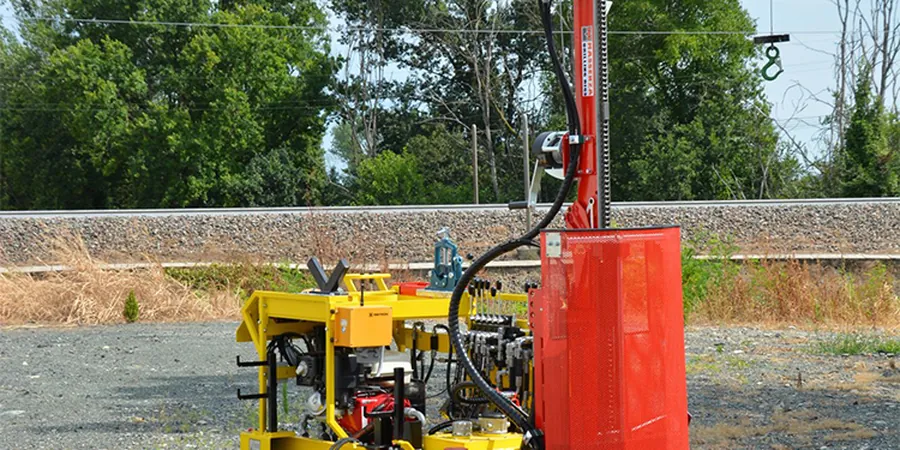
In Delta BC, SPT N-values in the upper 10 meters range from 2 to 15 blows per foot, indicating loose to medium dense sands requiring careful foundation design.
Methodology applied in Delta BC
Local geotechnical conditions in Delta BC
Delta BC's urban expansion has pushed development onto former farmland and tidal flats, where shallow peat and soft marine clays alternate with sand lenses. Without proper SPT profiling, the risk of differential settlement in multi-story buildings rises sharply. The 2015 earthquake scenario for the Fraser Delta highlighted widespread liquefaction potential in the sandy layers. SPT boreholes spaced at 30-50 m intervals, targeting depths of 20-30 m, help engineers map these hazardous zones. Ignoring the variability in N-values across the site can lead to overestimating bearing capacity and underestimating seismic demand.
Our services
We offer two complementary SPT services tailored to Delta BC's soil conditions:
SPT with Disturbed Sampling
Standard split-spoon sampling at 1.5 m intervals, logged on-site by a technician. Includes visual classification, moisture content, and N-value recording. Ideal for stratigraphic profiling and relative density estimates in sand layers.
SPT for Liquefaction Assessment
Extended SPT program with hammer energy calibration (E-field) to apply corrections per NCEER 2001. Data interpreted for CRR vs CSR curves, providing factor of safety against liquefaction for each layer. Suitable for seismic microzonation in Delta.
Frequently asked questions
What is the difference between N-SPT and corrected N60?
N-SPT is the raw blow count recorded in the field. N60 applies corrections for rod length, sampler liner, borehole diameter, and hammer energy efficiency to standardize results to 60% energy transfer. In Delta BC, where donut hammers are common, the correction factor can be 1.3 to 1.7, significantly affecting liquefaction analysis.
How much does an SPT test cost in Delta BC?
The typical cost for an SPT borehole in Delta BC ranges between CA$770 and CA$890, including mobilization within the Lower Mainland, drilling to 15 m depth, and field logging. Prices vary with depth, number of tests, and site access conditions.
What is the main risk of relying solely on SPT in Fraser Delta soils?
SPT can underestimate density in coarse gravel layers due to sampler refusal, but more critically, it may miss thin soft layers (peat, clay) between sand beds. These interbeds control settlement and liquefaction potential. Combining SPT with CPT or vs30/" data-interlink="1">shear wave velocity testing reduces this stratigraphic uncertainty.
At what depth should SPT be performed for a 6-story building in Delta?
For a 6-story building with a shallow foundation, SPT should reach at least 15 m below grade, or until encountering refusal (N > 50) in dense sand or glacial till. In Delta, where soft soils extend deeper, 20-25 m boreholes are common to capture the full compressible profile and ensure bearing strata are identified.