We run a mobile drill rig and hand auger team for contaminated soil remediation in Delta BC. The Fraser River delta means saturated silts and clays up to 300 m thick. Our vacuum excavator pulls soil from depth without cross-contaminating layers. Soil samples go directly into glass jars with zero headspace to preserve volatile organics. We coordinate with local landfills and treatment facilities before mobilization. Every job follows the BC Contaminated Sites Regulation (CSR) and CSA A23.2-9A / CSA A23.2-9A / CSA A23.2-9A / CSA A23.2-9A / CSA A23.2-9A / ASTM D1586 for SPT sampling when needed. The rig carries a photoionization detector (PID) for field screening of VOCs.
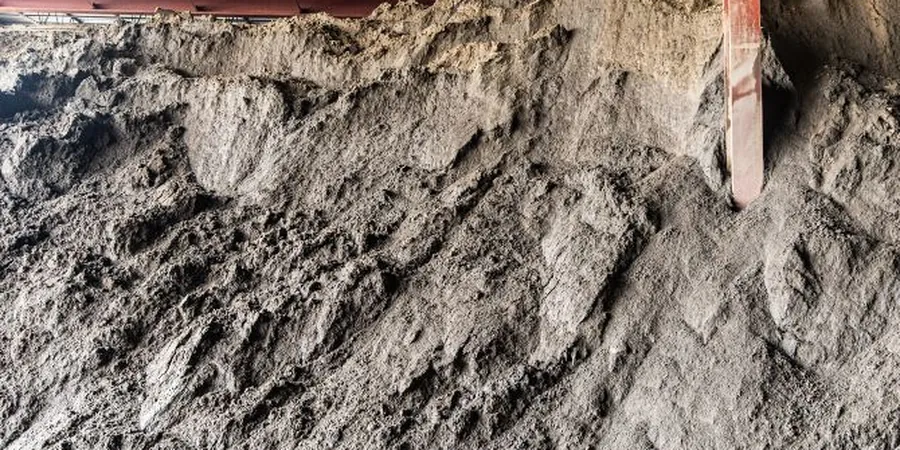
Delta BC’s peat and clay layers can trap contaminants for decades. Proper remediation starts with accurate delineation, not just removal.
Methodology applied in Delta BC
Local geotechnical conditions in Delta BC
North Delta has sandy soils with fast infiltration, so contaminants spread quickly toward Burns Bog. South Delta’s clay cap slows vertical migration but traps hydrocarbons near the surface. That creates vapour intrusion risks into basements and crawlspaces. If you only sample the top 1 m in a clay area you miss the plume. We always install at least one deeper borehole per 100 m2 to check for DNAPL pooling. Vapour monitoring wells are installed when buildings are within 30 m of the source. Missing a hot spot means the remediation fails regulatory approval and you reapply for a Certificate of Compliance.
Our services
We offer four core contaminated soil remediation services in Delta BC. Each is tailored to local geology and regulatory requirements.
Stage 1 & 2 Preliminary Site Investigation (PSI)
Historical review, site reconnaissance, and intrusive sampling to delineate contamination extent under BC CSR.
Remedial Action Plan (RAP) Design
Risk-based remediation approach: excavation, bioremediation, soil vapour extraction, or in-situ chemical oxidation.
Vapour Intrusion Assessment
Sub-slab vapour probes and indoor air monitoring per ASTM E2600-22 to assess inhalation risk.
Risk Assessment & DQRA
Detailed quantitative risk assessment for Tier 2 sites using BC CSR exposure models and site-specific data.
Frequently asked questions
What contaminants are most common in Delta BC soil?
Petroleum hydrocarbons (PHCs) from former gas stations and farms, plus metals like arsenic and lead from historic orchard spraying. We also find chlorinated solvents near industrial sites.
How deep do you sample for contaminated soil remediation in Delta BC?
Typically 3 to 6 m below grade. In areas with clay cap we go to 9 m to check for perched contamination. Depth is based on the site conceptual model and BC CSR guidance.
How long does the remediation process take?
Field sampling takes 1 to 3 days. Lab results come back in 5 to 10 business days. A full Remedial Action Plan is completed within 4 to 6 weeks from the start of fieldwork.
What is the typical cost range for contaminated soil remediation in Delta BC?
Costs vary by site size, contaminant type, and cleanup target. A typical Stage 2 PSI plus lab testing ranges between CA$4,480 and CA$15,770. Contact us for a site-specific quote.