Many construction teams in Delta BC assume that flat terrain means zero landslide risk. That assumption fails when debris flows originate from the Fraser River escarpment or the steep slopes of nearby Burnaby Mountain. A proper debris flow analysis identifies source zones, runout paths, and deposition areas before you break ground. We combine field reconnaissance with numerical modeling to quantify flow velocity, impact pressure, and sediment volume. This is not a generic desktop study. Every parameter is calibrated to local soil conditions. For sites near the river we also cross-reference with geotextiles data to evaluate erosion control needs. The result is a defensible hazard assessment that satisfies municipal permitting requirements and protects your project from costly post-construction surprises.
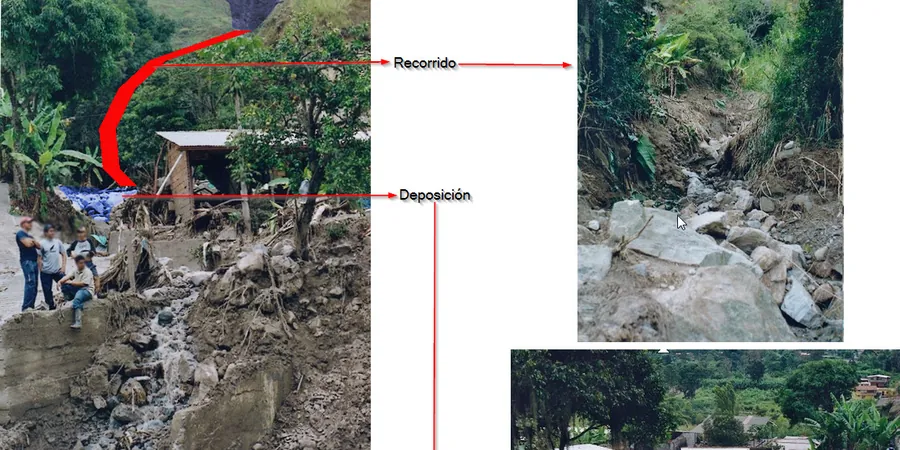
Debris flows in Delta BC can travel over 3 km from source, reaching velocities exceeding 5 m/s on moderate slopes.
Methodology applied in Delta BC
- Hazard classification per NBCC 2020 landslide risk categories
- Impact pressure contours for structural design
- Recommendations for deflection barriers or catchment basins
Local geotechnical conditions in Delta BC
The combination of heavy winter rainfall, rapid snowmelt from the Coast Mountains, and loose glacial sediments creates ideal conditions for debris flows near Delta BC. A single storm can mobilize tens of thousands of cubic meters of material. The risk is not limited to hillsides. Channels that appear dry for years can activate in minutes. Without a site-specific analysis, you may underestimate the required freeboard for a bridge or the necessary impact load for a retaining wall. We have seen cases where a standard 50 kPa design load was exceeded by a factor of three during a 100-year event. That margin of error can mean structural failure or total loss.
Our services
We offer three complementary debris flow analysis services tailored to Delta BC conditions.
Watershed-scale hazard mapping
LiDAR-based terrain analysis combined with field verification to delineate debris flow source areas and runout paths across the entire contributing watershed.
Numerical runout modeling
Structural impact assessment
Frequently asked questions
How does debris flow analysis differ from standard slope stability assessment?
Standard slope stability calculates factor of safety against sliding for a static soil mass. Debris flow analysis models the dynamic movement of water-saturated sediment down a channel, including velocity, impact pressure, and runout distance. Both are needed for comprehensive risk management.
What is the typical cost range for a debris flow analysis in Delta BC?
The cost ranges between CA$1.750 and CA$6.020 depending on watershed size, number of scenarios modeled, and reporting detail. A site with simple topography and one flow path falls at the lower end; complex multiple-channel sites require the full scope.
How long does it take to complete a debris flow study?
A standard study takes 3 to 6 weeks from field visit to final report. Permitting submittals often require 2 weeks of review time after delivery. Rushed timelines are possible for an additional fee.
What data do you need from the client to start?
We need a site plan showing proposed structures, any existing drainage or retention features, and a digital elevation model if available. LiDAR data is ideal but not mandatory. We handle the rest including field reconnaissance and laboratory testing of sediment samples.