We worked on a large residential subdivision in the Burns Bog area of Delta BC where the municipality required bioretention swales to manage stormwater runoff. The native peat and silty clay soils had us questioning the assumed infiltration rates from the geotechnical report—so we ran double-ring infiltrometer tests at multiple locations. That field data changed the design: the swales needed underdrains because the measured rates were below 10 mm/h in several pockets. In Delta BC, where the water table sits close to the surface across much of the municipality, relying on literature values for infiltration can lead to undersized facilities or long-term ponding problems. Our team has performed these tests on sites ranging from agricultural lots in East Delta to industrial yards along River Road.
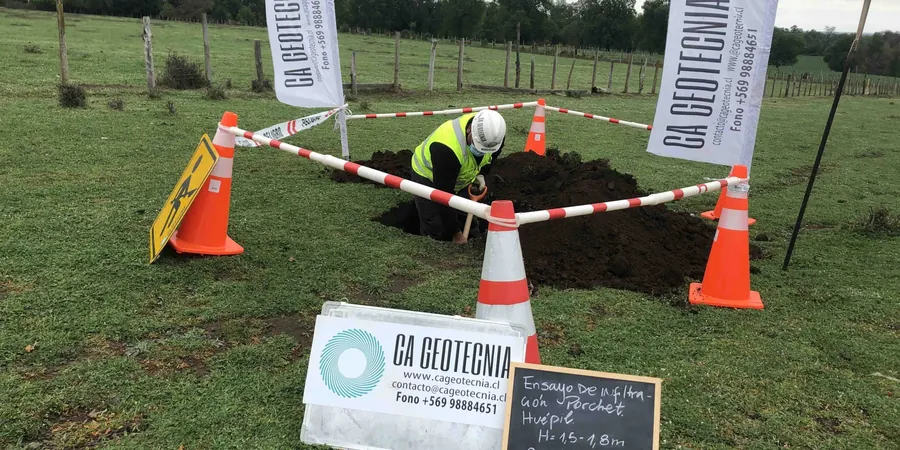
In Delta BC, relying on literature values for infiltration can lead to undersized facilities or long-term ponding problems.
Methodology applied in Delta BC
Local geotechnical conditions in Delta BC
The NBCC 2020 and Delta BC's Subdivision Servicing Bylaw both mandate that stormwater infiltration rates must be determined by field testing—not by soil classification alone. We've seen projects held up during building permit review because the submitted rates came from a table rather than a site-specific infiltrometer test. In this municipality, the engineering department requires a minimum of one test per 0.2 hectares for bioretention areas, and the results must be signed off by a professional engineer. Our lab is accredited under ISO 17025 for field permeability testing, and we follow the ASTM D3385 procedure strictly. The risk of relying on assumed values is real: overestimating the infiltration rate can lead to surface flooding, while underestimating it forces unnecessary underdrain costs.
Our services
Beyond standard infiltration testing, we offer complementary services to complete your geotechnical picture for Delta BC sites.
Porchet Borehole Infiltration Test
A cost-effective method for shallow percolation rates using a hand-augered borehole. Ideal for small residential lots or preliminary screening before detailed double-ring testing.
Double-Ring Infiltrometer Testing
The industry standard for accurate, repeatable infiltration data. We use 30/60 cm rings with constant-head control to measure steady-state Ksat for stormwater basin design.
Seasonal Infiltration Monitoring
For sites with a high water table or peat soils, we perform tests at different times of the year to capture seasonal variation. This is critical for LID features in Delta BC.
Permeameter Laboratory Tests
When field conditions are impractical (e.g., saturated peat), we run falling-head or constant-head permeability tests on undisturbed samples in our lab to complement field results.
Frequently asked questions
How many infiltration tests does Delta BC require for a typical lot?
For residential subdivisions, Delta BC's engineering department typically requires a minimum of one double-ring infiltrometer test per 0.2 hectares of drainage area. For commercial or industrial sites, we often recommend at least three tests per catchment to capture soil variability. The exact number depends on the proposed stormwater management system and the soil conditions encountered during the first round of testing.
How much does an infiltration test cost in Delta BC?
A standard double-ring infiltrometer test in Delta BC ranges from CA$410 to CA$600 per test location, including mobilization within the municipality, equipment setup, field execution, and a summary report with Ksat values. The final price depends on the number of tests, site access conditions, and whether you require seasonal monitoring. We provide a firm quote after a brief site review.
What is the difference between Porchet and double-ring infiltrometer tests?
The Porchet method uses a single borehole filled with water and measures the falling head over time. It is simpler and cheaper but assumes one-dimensional flow in the borehole walls. The double-ring infiltrometer uses two concentric rings to force one-dimensional vertical flow, giving more accurate and repeatable Ksat values for stormwater design. For projects requiring NBCC compliance or municipal approval in Delta BC, we almost always recommend the double-ring method.