In Delta BC, the Fraser River delta deposits create deep layers of soft silt and clay that challenge any construction project. The National Building Code of Canada (NBCC) requires engineered fill and separation layers to prevent soil mixing and differential settlement. Specifying the right geotextile here means selecting a fabric with adequate grab strength, permittivity, and puncture resistance for these saturated, compressible soils. Without that specification, the separation function fails and the structural fill loses integrity. Our team works with ASTM D4632 for tensile testing and ASTM D4751 for apparent opening size, tailoring each specification to the site's specific subgrade conditions. For deeper stability analysis, we often pair geotextile design with a consolidation study to predict long-term settlement behavior.
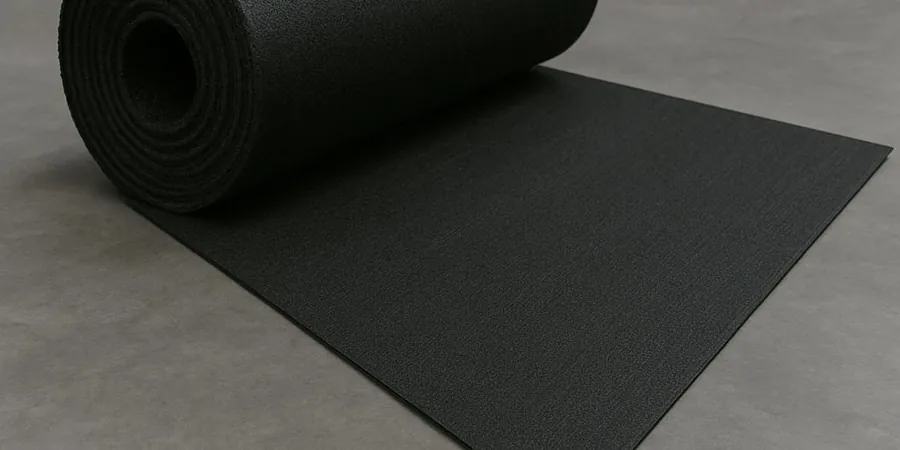
Geotextile specification on Fraser Delta clays often determines whether a road base survives the first wet season without pumping failure.
Methodology applied in Delta BC
Local geotechnical conditions in Delta BC
A common mistake we see in Delta BC is contractors specifying a cheap nonwoven geotextile without checking the subgrade CBR. On soft delta soils with CBR values under 1, the fabric must be Class 1 or higher. If the spec ignores survivability, the geotextile tears during installation or gets punctured by angular fill. Within months, subgrade soil pumps up through the failed layer, causing rutting and pavement cracking. The cost of replacing a failed road section far exceeds the small premium for a properly specified geotextile. Our advice: always include the AASHTO M288 class and confirm it with the project geotechnical report.
Our services
We offer three core services to help Delta BC clients get the geotextile specification right every time.
Geotextile selection and specification review
We analyze the project's subgrade conditions, fill type, and construction loads to recommend the correct geotextile class, polymer type, and index properties. The output is a clear specification sheet ready for tender documents.
Laboratory index testing
Our in-house lab performs grab tensile, tear, puncture, permittivity, and AOS tests on candidate geotextiles. Results come with a compliance report against ASTM and AASHTO standards, ensuring the chosen product meets project requirements.
Installation QA/QC and field inspection
We provide on-site verification that the installed geotextile matches the specification. Our inspectors check overlap lengths, seam strength, and damage from placement, documenting everything for the quality control file.
Frequently asked questions
What geotextile class do I need for a road base on soft delta soils in Delta BC?
For soft delta soils with CBR below 1, you typically need a Class 1 geotextile per AASHTO M288. That means a minimum grab tensile strength of 900 N and puncture resistance of 500 N. Your geotechnical engineer should confirm based on the actual subgrade strength and fill angularity.
How much does a geotextile specification review and testing package cost in Delta BC?
A typical package covering index testing (grab, tear, puncture, permittivity, AOS) plus a specification review ranges from CA$550 to CA$1.760, depending on the number of candidate products tested and the complexity of the project. Contact us for a quote tailored to your scope.
Can I use a nonwoven geotextile for both separation and drainage in Delta BC?
Yes, nonwoven geotextiles work well for combined separation and drainage in saturated conditions, as long as the permittivity is at least 0.7 s⁻¹ and the AOS is sized to retain the local silt. However, for high-flow drainage applications, a woven monofilament may be more appropriate. Always verify with the project's hydraulic requirements.