In Delta BC, the combination of Fraser River deltaic deposits and high seismic hazard creates a unique design challenge. We frequently see shallow foundations that fail to account for the thick sequences of soft clay and silt below the water table. A proper seismic foundation design must begin with site-specific subsurface investigation, including shear wave velocity profiling and SPT energy corrections. For deeper deposits, we integrate MASW-Vs30 surveys to characterize the soil column stiffness and classify the site per NBCC 2020 Site Class E or F. This data directly controls the seismic coefficient and the need for ground improvement.
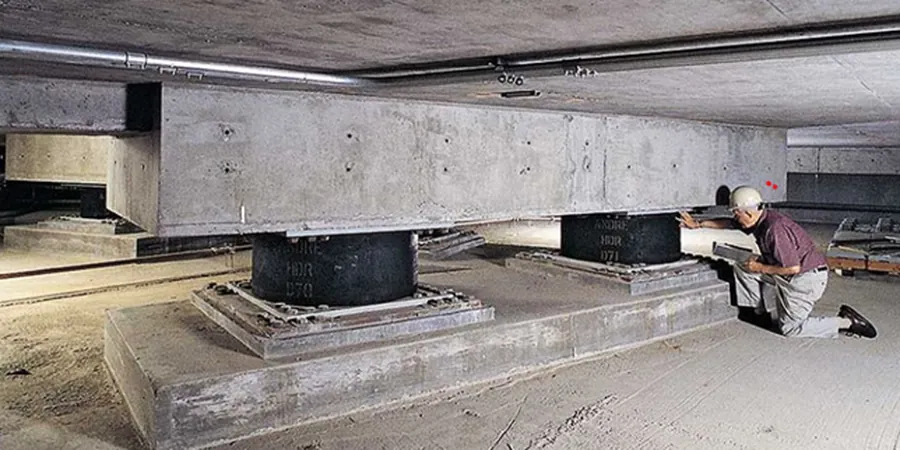
For Delta BC soft clay sites, ignoring cyclic softening can lead to bearing failures under design earthquake motions – a risk that site-specific seismic foundation design directly mitigates.
Methodology applied in Delta BC
- Liquefaction triggering analysis using Youd-Idriss 2001 methodology
- Cyclic softening evaluation for plastic clays under NBCC 2020 provisions
- Kinematic and inertial soil-structure interaction for pile-supported systems
Local geotechnical conditions in Delta BC
Comparing a site in North Delta with one in Ladner reveals dramatic differences in seismic performance. North Delta soils, with higher sand content and lower plasticity, tend to liquefy under moderate ground motions. In Ladner, the deep clay deposits undergo cyclic softening, leading to large post-earthquake settlements and potential bearing failures. Without seismic foundation design tailored to these distinct behaviors, structures risk excessive differential settlement, tilting, or even collapse. We have analyzed over a dozen Delta BC projects where standard shallow foundations were replaced with deep pile systems or ground improvement after proper seismic evaluation – saving millions in retrofit costs.
Our services
Our seismic foundation design services for Delta BC are structured to address the full range of geotechnical challenges posed by the region's soft soils and high seismicity.
Liquefaction Hazard Assessment
Site-specific evaluation of liquefaction potential using SPT, Vs30, and cyclic resistance curves per NCEER 2001. Includes post-liquefaction settlement analysis and lateral spread displacement estimates for Delta BC's deltaic soils.
Deep Foundation Seismic Design
Design of driven piles and drilled shafts with kinematic and inertial soil-structure interaction. We calculate p-y curves for soft clay, compute group effects, and verify structural capacity per CSA A23.3 for NBCC seismic demands.
Frequently asked questions
What is the difference between seismic foundation design for Delta BC versus Vancouver?
Delta BC sites generally have softer soils (Site Class E) compared to Vancouver's glacial till sites (Site Class C). This means higher amplification, longer period motions, and a greater likelihood of liquefaction or cyclic softening. Design must account for these softer deposits directly.
How much does a seismic foundation design study cost in Delta BC?
For a typical single-family home or small commercial building, the study ranges between CA$1,840 and CA$5,560. Larger developments or deep foundation designs can exceed this range. Contact us for a project-specific quote.
Do I need a seismic foundation design if my building is only two stories?
Yes, if the building is in a high-seismic zone like Delta BC. NBCC 2020 requires seismic design for all structures, regardless of height, unless exempted by the building official. Even a two-story building on soft clay can experience significant damage if foundations are not designed for cyclic loading.
What soil parameters are critical for seismic foundation design in Delta BC?
Key parameters include Vs30, SPT N-values (corrected for energy and overburden), plasticity index, undrained shear strength, and cyclic resistance ratio (CRR). These feed into liquefaction analysis, site class determination, and foundation sizing.
How long does a seismic foundation design study take?
A standard study for a single lot takes 2 to 4 weeks, including field work, lab testing, and reporting. Larger subdivisions or complex deep foundation designs may require 6 to 10 weeks. We prioritize Delta BC projects to align with municipal permit timelines.