A common mistake construction teams make in Delta BC is treating all clay as uniform. The Fraser River delta deposits include sensitive Leda-like clays and post-glacial marine silts that can exhibit volumetric changes exceeding 8% under moisture variation. Without dedicated expansive soil evaluation in Delta BC, a slab-on-grade designed for 25 kPa bearing capacity may experience differential heave exceeding 30 mm within the first wet season. Standard Proctor compaction alone does not capture the swell index or swelling pressure at constant volume; these parameters require oedometer testing under inundation. The local building code references NBCC 2020 and CSA A23.3, but neither substitutes for site-specific swell-consolidation data when the subgrade includes plastic clay with liquid limits above 50%.
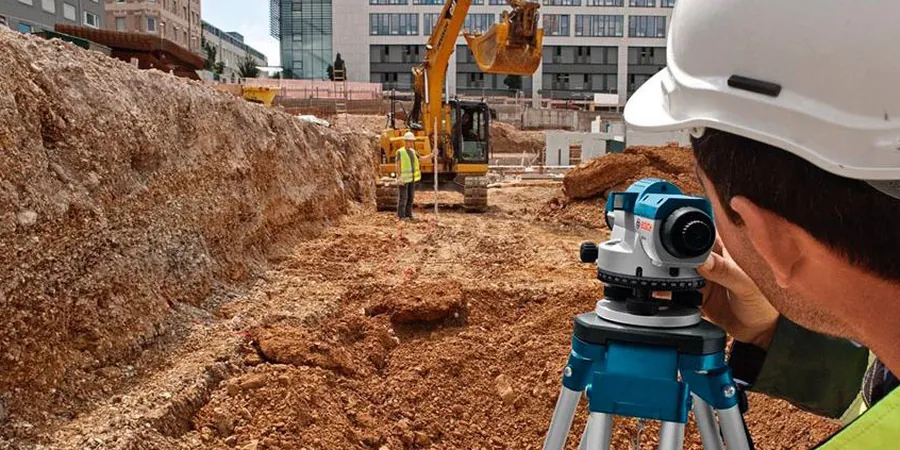
A slab-on-grade in Delta BC can experience differential heave exceeding 30 mm without proper swell-consolidation testing under inundated conditions.
Methodology applied in Delta BC
Local geotechnical conditions in Delta BC
Comparing North Delta subdivisions near Burns Bog with the agricultural flats of Ladner reveals stark differences in swelling behavior. The organic-rich peat and clay mix in the bog area has lower plasticity but higher compressibility, whereas Ladner's marine clay can generate swelling pressures up to 150 kPa. If expansive soil evaluation in Delta BC is skipped or replaced with a generic borehole log, the risk of slab heave, cracked foundation walls, and misaligned doors increases dramatically. In both zones, seasonal water table fluctuation between 0.5 m and 2.0 m depth amplifies the cyclic shrink-swell action, making it essential to measure both swell and consolidation parameters on undisturbed samples.
Our services
We offer two targeted services for expansive soil evaluation in Delta BC:
Laboratory Swell-Consolidation Suite
Oedometer testing per ASTM D4546 (CFEM Ch 4) (CFEM Ch 4) (CFEM Ch 4) (CFEM Ch 4) (CFEM Ch 4) including free-swell, percent-swell under incremental surcharge, and swelling pressure at constant volume. Results reported with index properties and classification.
Field Suction & Moisture Profiling
Filter paper or tensiometer measurements at multiple depths to map active zone moisture variation. Combined with undisturbed sampling for laboratory swell tests.
Frequently asked questions
What is the difference between free-swell and percent-swell under surcharge?
Free-swell measures the unrestrained volumetric increase of a dry soil pellet placed in water. Percent-swell under surcharge applies a vertical load (e.g., 7 kPa) to simulate foundation pressure, giving a more realistic heave estimate for Delta BC's marine clays.
How long does an expansive soil evaluation in Delta BC typically take?
Laboratory swell-consolidation tests require 7 to 14 days from sample receipt to final report, including atterberg limits and classification. Field suction profiling can be completed in 2 to 3 days depending on access and number of test pits.
What is the typical cost range for an expansive soil evaluation in Delta BC?
For a standard residential lot with 2 to 3 boreholes and a full swell-consolidation suite, the cost ranges between CA$950 and CA$1.950. Larger commercial sites with more sampling points may exceed this range.
Why can't I rely on the bearing capacity from a standard geotechnical report?
Bearing capacity alone does not account for volumetric change. In Delta BC, clays with plasticity index above 30% can develop swelling pressures that exceed the applied foundation load, causing heave even when bearing capacity is adequate. Swell testing is required.
Which areas of Delta BC are most prone to expansive soil problems?
The marine clay deposits in Ladner and Tsawwassen are most susceptible, with liquid limits frequently above 55% and swelling pressures up to 150 kPa. North Delta near Burns Bog shows moderate expansion potential but higher organic content and compressibility.