Geophysical surveys in Delta, BC, characterize subsurface conditions across the Fraser River delta, where thick sequences of soft silt, peat, and liquefiable sands dominate. These non-invasive methods map stratigraphy, bedrock depth, and groundwater pathways critical for complying with the British Columbia Building Code and seismic site classification per NBCC 2020. Common techniques include electrical resistivity (VES) to delineate saline intrusion and clay layers, and MASW / Vs30 profiling for seismic hazard assessment.
Infrastructure, flood protection, and geotechnical investigations routinely integrate geophysics to reduce drilling uncertainty and optimize foundation design. High-resolution GPR surveys locate buried utilities and rebar in dike and bridge deck assessments, while seismic methods image deeper basin geometry for tunnel and pipeline projects. Our Delta-based team tailors each survey to deltaic ground conditions, delivering defensible data for engineers and regulators.
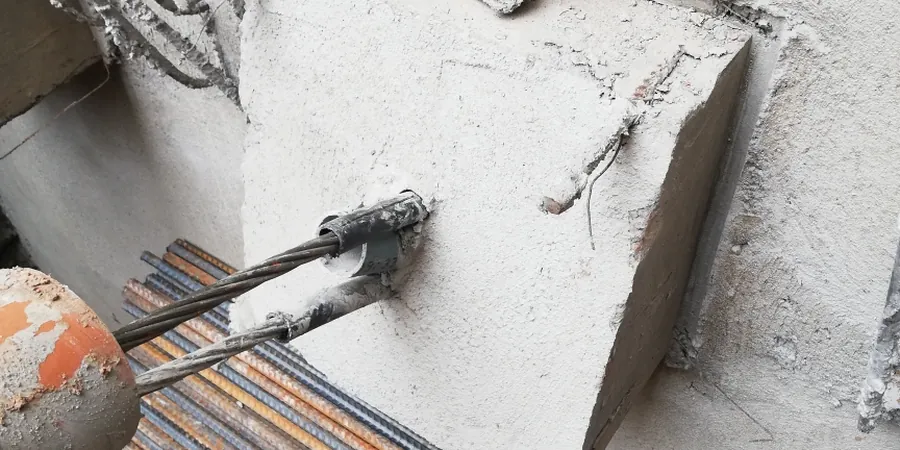
In Delta BC, creep in peat and soft clay governs anchor bond length more than ultimate capacity.
Methodology applied in Delta BC
- Bond length calculation based on skin friction from triaxial or direct shear tests
- Free stress length verification to avoid anchor interference
- Corrosion protection class selection per CSA S6 for permanent installations
Local geotechnical conditions in Delta BC
Delta BC grew rapidly in the 1960s and 70s with drainage of agricultural land and peat bogs for housing and industry. Many early subdivisions were built without proper anchor design for excavations because the soft ground was treated as uniform fill. The hidden risk is creep settlement in peat layers that can relax anchor loads over time. An anchor that tested fine at installation may lose 30% of its preload within two years if bond zone creep is not accounted for. The team uses long-term creep testing and sacrificial tendons to verify performance in these challenging Delta BC soils.
Our services
Our active and passive anchor design services in Delta BC cover the full scope from bond zone evaluation to load testing and long-term monitoring.
Bond Zone Assessment & Testing
Site-specific pull-out tests in peat and soft clay to determine skin friction and creep behavior, with recommendations for bond length and anchor spacing.
Active Anchor Design & Stressing
Post-tensioned anchor systems for retaining walls and deep excavations, including proof load verification and lock-off load calculation per CSA A23.3.
Passive Anchor Installation & Monitoring
Gravity-activated anchor systems for temporary shoring and slope stabilization, with instrumentation for load relaxation and displacement tracking.
Frequently asked questions
What is the difference between active and passive anchors in Delta BC soils?
Active anchors are post-tensioned to a predetermined load, which preloads the ground and reduces movement. Passive anchors are not preloaded and mobilize resistance only when the ground displaces. In Delta BC's soft soils, active anchors are preferred for permanent works to control creep, while passive anchors may suit temporary excavations where some movement is acceptable. The choice depends on allowable deflections and long-term load stability.
How much does anchor design and testing cost in Delta BC?
The typical range for anchor design and pull-out testing in Delta BC is CA$1,360 to CA$5,830, depending on anchor depth, number of proof load cycles, and corrosion protection class. Costs increase for sites requiring creep testing in peat or for permanent anchors with Class I protection. A site visit and bond zone assessment are included in the base scope.
Do I need a corrosion protection class for temporary anchors?
Not always. CSA S6 requires Class II corrosion protection for temporary anchors with a service life under 18 months. For anchors exposed to aggressive groundwater (common in Delta BC's peat and tidal zones), Class I protection with double corrosion barriers is recommended even for temporary works. The geotechnical team evaluates groundwater chemistry and exposure conditions to decide the appropriate class.