Delta BC sits on the Fraser River delta, where the top 5 to 10 meters consist of soft, compressible silty clay and peat layers. Groundwater sits less than 1.5 meters below surface in many areas, creating a constant challenge for road subgrade design. This means any pavement structure must account for low bearing capacity and long-term consolidation settlement. We have worked on dozens of local road projects — from Ladner Trunk Road upgrades to industrial access routes in Tilbury — and we know the soil profile intimately. Before designing the subgrade, we always run classification of soils to identify organic content and fines percentage, which directly impact compaction targets and drainage strategy.
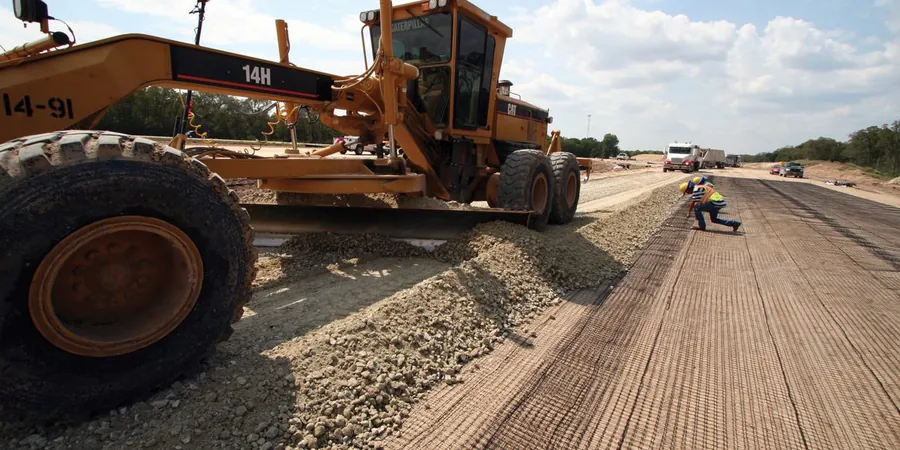
In Delta BC, road subgrade design must address soft peat, high water table, and long-term consolidation before any pavement layer is placed.
Methodology applied in Delta BC
Local geotechnical conditions in Delta BC
The National Building Code of Canada (NBCC 2020) and the BC Building Code require that all pavement subgrades undergo a geotechnical assessment before construction. In Delta BC, the risk is threefold: first, organic soils undergo secondary compression for years after loading, causing differential settlement at utility connections. Second, the high water table reduces effective stress and can lead to frost heave in winter. Third, seismic liquefaction of loose saturated sands beneath the silty clay cap can trigger lateral spreading beneath the road. We follow the FHWA NHI-05-037 manual for subgrade stabilization and always include settlement monitoring recommendations in our reports.
Our services
Our road subgrade design service covers the full chain from investigation to specification. We offer two core sub-services tailored to Delta BC conditions.
Subgrade Investigation & Testing
Boreholes and test pits to 6 m depth, SPT and CPT soundings, undisturbed sampling for consolidation and triaxial tests, CBR and Proctor testing for compaction control.
Subgrade Stabilization Design
Cement or lime treatment design, geotextile separation layers, prefabricated vertical drains for accelerated consolidation, and working platform thickness calculations.
Frequently asked questions
What is the typical CBR of subgrade soils in Delta BC?
Untreated silty clay and peat in Delta BC usually yield CBR values between 1 and 4%. After cement stabilization or replacement with select granular fill, we can achieve CBR above 8% for structural pavement sections.
How does the high water table affect road subgrade design?
The water table sits within 1.5 m of the surface in most of Delta BC. This reduces effective stress, lowers bearing capacity, and increases frost heave potential. We design drainage layers, subgrade elevation raises, and sometimes prefabricated vertical drains to manage pore pressure.
What is the cost range for a road subgrade design study in Delta BC?
For a typical collector or arterial road project, the investigation and design study ranges between CA$1,540 and CA$4,650 depending on site area, number of boreholes, and laboratory testing scope. Contact us for a project-specific quote.
Do you recommend cement stabilization for all road subgrades in Delta BC?
No. Cement stabilization is effective when the subgrade has low organic content (below 5%) and plasticity index between 10 and 30. In peat-rich zones, we prefer removal and replacement or geotextile separation with deep compaction. The choice depends on the specific soil profile.