Delta BC sits on the Fraser River delta’s deep alluvial deposits, a geologically young environment where saturated silts and peaty layers compress unevenly under load. Unlike solid bedrock sites, the region’s soft soils can produce vertical displacements that differ by centimeters across a single foundation footprint. Without a proper differential settlement analysis, even well-designed structures can suffer cracked slabs, jammed doors, and misaligned frames. Our team combines site-specific borings with advanced consolidation testing to quantify how much each soil layer will settle under your proposed loads. We also integrate consolidation data to model time-dependent behavior, ensuring your foundation design accounts for both immediate and long-term ground response in this challenging Fraser Valley setting.
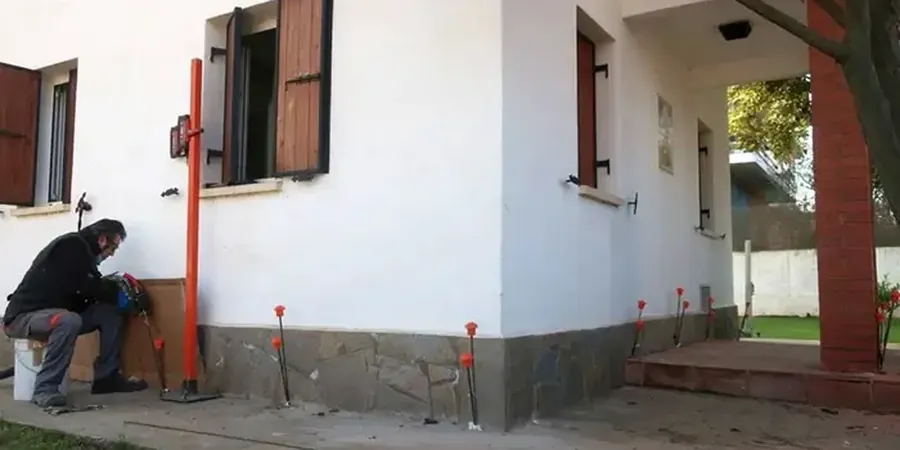
In Delta BC, even a 15 mm differential across a column bay can trigger structural distress — we measure it before the concrete is poured.
Methodology applied in Delta BC
- Borehole sampling with undisturbed thin-wall tubes to capture natural moisture and void ratios
- One-dimensional consolidation tests (CSA + CSA + CSA + CSA + ASTM D2435 (also CFEM Ch 2) (also CFEM Ch 2) (also CFEM Ch 2) (also CFEM Ch 2) (also CFEM Ch 2)) to determine compression index, recompression index, and preconsolidation pressure
- Finite-element modeling that simulates load distribution and differential movement across the slab
Local geotechnical conditions in Delta BC
The biggest risk in Delta BC isn't that the ground settles — it's that one corner settles twice as much as the other. We've seen a warehouse on River Road where the north end dropped 40 mm while the south side moved only 12 mm, causing a 28 mm differential that warped the steel frame. That kind of damage is expensive to fix and often requires underpinning or slab jacking. Our analysis catches these contrasts early by testing multiple boreholes at different foundation locations. We also advise on preloading or drenes-verticales to accelerate consolidation before construction, reducing long-term differential movement risks.
Our services
Our differential settlement analysis in Delta BC is supported by complementary services that give you a complete picture of ground behavior.
Consolidation Testing & Settlement Modeling
Incremental loading tests on undisturbed samples to define compressibility parameters, followed by 2D finite-element analysis that predicts differential movement across the foundation footprint.
Field Monitoring & Verification
Installation of settlement plates and inclinometers to track real-time movement during and after construction, comparing actual displacement against predicted values for quality assurance.
Frequently asked questions
What is the difference between total settlement and differential settlement?
Total settlement is the overall vertical drop of a structure, while differential settlement is the uneven movement between two points — for example, one column sinking 30 mm and another sinking only 10 mm. In Delta BC, differential settlement is more critical because it induces bending stresses in the frame, causing cracks and misalignments long before total settlement becomes a problem.
How much does a differential settlement analysis cost in Delta BC?
For a typical residential or light commercial project, the cost ranges from CA$890 to CA$2,900 depending on the number of boreholes, laboratory tests, and the complexity of the finite-element model. We provide a fixed-price quote after reviewing your structural loads and site conditions.
What soil types in Delta BC cause the most differential settlement?
The Fraser River delta contains highly compressible organic silts and fibrous peat layers that vary in thickness across short distances. These materials have high void ratios and low preconsolidation pressures, meaning they compress significantly under load — and the compression is rarely uniform. Lenses of sand or shell fragments within the silt also create stiffness contrasts that amplify differential movement.
How long does the analysis take from sampling to final report?
Field drilling and undisturbed sampling typically takes one to two days. Laboratory consolidation tests run for 10 to 14 days because each load increment must reach 100% primary consolidation before the next step. The full report, including settlement modeling and foundation recommendations, is delivered within three to four weeks from the start of fieldwork.