The drilling rig sets up on the soft floodplain of Delta BC, its tracks sinking slightly into the silty clay. For tunnel projects, we deploy continuous sampling tubes and piezocone probes to measure the subtle changes in soil behavior at depth. The Fraser River delta deposits here are young, compressible, and highly variable. We log every meter of core and run field vane tests to capture undrained shear strength in real time. Before any tunnel alignment is finalized, we correlate these results with standard penetration resistance from adjacent boreholes. This initial site characterization determines everything from excavation method to lining design. It is the foundation of safe tunneling in this challenging environment.
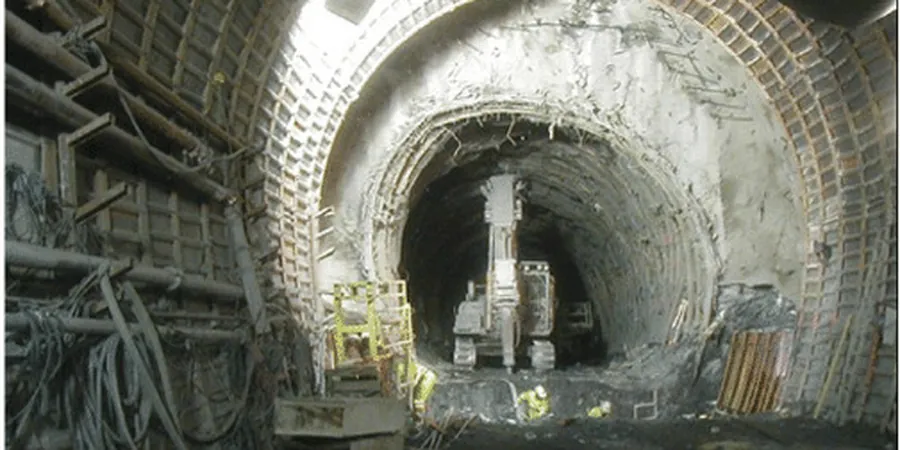
Tunneling through Delta BC soft soils requires real-time pore pressure monitoring and undrained strength profiling to avoid sudden crown collapse.
Methodology applied in Delta BC
Local geotechnical conditions in Delta BC
The Fraser River delta is one of the most seismically active regions in Canada. Delta BC sits on a thick sequence of soft Holocene sediments that amplify ground motion. During an earthquake, these soils can lose strength and liquefy, causing tunnel floatation or collapse. The high water table, often less than 2 meters deep, adds buoyancy forces that must be countered with heavy linings or tension anchors. We use advanced cyclic triaxial testing and numerical modeling to evaluate post-seismic stability. Ignoring these local conditions leads to expensive failures.
Our services
Our geotechnical analysis for soft soil tunnels in Delta BC covers the full project cycle from site investigation to construction support.
Detailed Ground Investigation for Tunnel Alignment
A comprehensive program of boreholes, CPTu soundings, and laboratory testing to characterize the soft soil profile along the planned tunnel route. We deliver soil parameters for finite element modeling and lining design.
Seismic Hazard and Liquefaction Assessment
Evaluation of cyclic softening potential using NCEER SPT-based methods and advanced cyclic triaxial tests. We provide site-specific acceleration time histories and post-seismic deformation estimates.
Frequently asked questions
Why is soft soil tunneling in Delta BC more difficult than in other regions?
Delta BC sits on the Fraser River delta, where soft clay and peat deposits exceed 30 meters in thickness. The high water table, low undrained strength, and high sensitivity make excavation prone to squeezing, raveling, and long-term settlement.
What is the typical cost range for a geotechnical analysis for a soft soil tunnel in Delta BC?
The cost varies with tunnel length and investigation scope, but a typical range is CA$5,010 to CA$22,620. This covers field drilling, laboratory testing, and a final design report.
Which standards govern tunnel geotechnics in British Columbia?
The National Building Code of Canada (NBCC 2020) sets seismic and foundation requirements. We also follow CSA A23.2-9A / CSA A23.2-9A / CSA A23.2-9A / CSA A23.2-9A / CSA A23.2-9A / ASTM D1586 for SPT procedures and the Canadian Geotechnical Society's guidelines for tunnel design.
How do you handle the high water table during tunnel excavation?
We design depressurization systems using deep wells or eductor pumps. Continuous piezometer monitoring ensures pore pressures stay below critical levels, preventing base heave and face instability.
Can existing buildings near the tunnel route be protected?
Yes. We establish trigger levels for ground movement and install monitoring arrays. If settlements exceed thresholds, compensation grouting or underpinning is implemented before damage occurs.