Delta BC sits on the Fraser River delta, a thick sequence of Holocene silts, clays, and peat that accumulated over the past 10,000 years. This young, compressible geology means conventional shallow foundations often cannot meet bearing or settlement tolerances, especially in the central and northern parts of the municipality. Engineers here have long turned to deep foundation alternatives. Micropile design in Delta BC offers a drilled-and-grouted solution that transfers structural loads through soft upper layers into the underlying Pleistocene sands or till. Before specifying a micropile layout, we usually correlate capacity with a CPT sounding to profile stratigraphy continuously, and we check for organic pockets that could affect bond stress using a classification of soils program.
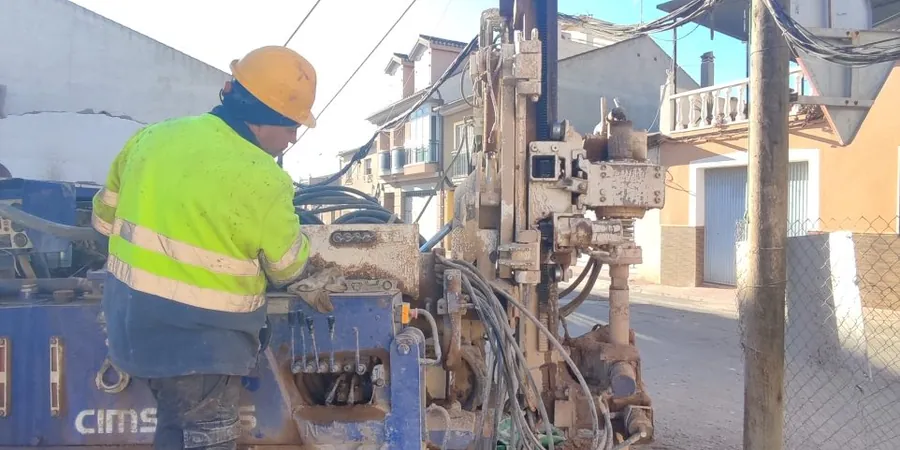
Micropile design in Delta BC routinely encounters negative skin friction in peat layers exceeding 10 m thickness that must be explicitly calculated.
Methodology applied in Delta BC
Local geotechnical conditions in Delta BC
The NBCC 2020 mandates that sites underlain by soft, sensitive clays or liquefiable sands undergo a detailed seismic hazard analysis. In Delta BC, the combination of high groundwater (typically 1–3 m below grade) and loose to medium-dense silty sands creates a legitimate liquefaction concern for the upper 6–8 m. Micropile design must therefore include a downdrag evaluation if the soil settles relative to the pile, and a lateral spreading check where the site slopes toward a ditch or river. We apply the Youd-Idriss 2001 procedure for SPT-based liquefaction triggering and the FHWA-NHI-05 guidelines for micropile axial capacity under seismic conditions. A liquefaction assessment is always paired with micropile design in Delta BC to confirm that the foundation system remains serviceable after a design-level event.
Our services
We provide three complementary service lines that support micropile design in Delta BC, from initial ground characterization to final load testing.
Geotechnical Investigation & Stratigraphy Profiling
Boreholes to 25 m depth with SPT and CPT, including undisturbed sampling of sensitive clays and peat for lab consolidation and shear strength tests.
Structural Micropile Design
Axial and lateral capacity calculations per FHWA-NHI-05, including downdrag, group efficiency, and seismic demand under NBCC 2020.
Static Load Test Program
Bi-directional (Osterberg) or top-down compression tests to verify design assumptions and confirm bond stress in the target bearing stratum.
Frequently asked questions
How does high groundwater affect micropile design in Delta BC?
Water tables within 1–3 m of grade reduce effective stress in the bond zone and can cause washout of cement grout if drilling fluid is not properly balanced. We require a tremie-grouting method and a minimum casing advance 1 m below the water table before grouting. The bond stress values used in design are reduced by 20–30 % for saturated silts and clays relative to drained conditions.
What is the typical cost range for micropile design in Delta BC?
The typical cost range for a full micropile design package in Delta BC is between CA$1.850 and CA$5.360, depending on the number of borings required, the depth of the bearing stratum, and whether load testing is included. A preliminary desktop assessment is more affordable; a design with site-specific testing and a static load test falls at the higher end.
Can micropiles be installed in the Burns Bog peat deposits?
Yes, but the design must account for negative skin friction caused by ongoing peat consolidation. We recommend a two-stage approach: first, install a temporary casing through the full peat thickness and grout the annulus; second, after the grout sets, drive a steel H-pile or threaded bar to the bearing layer. The bond zone must be located in the underlying Pleistocene sands, not in the peat itself.