In Delta BC, many times we see retaining walls that fail within the first few years because the design didn't account for the region's thick layers of soft Fraser River silt and peat. That's why before any wall goes in, we run a proper site investigation. The combination of high water table and low-strength soils here demands careful geotechnical analysis. We often pair our wall designs with a licuefaction assessment for sites near the river and use MASW testing to map the stiffness profile across deeper deposits.
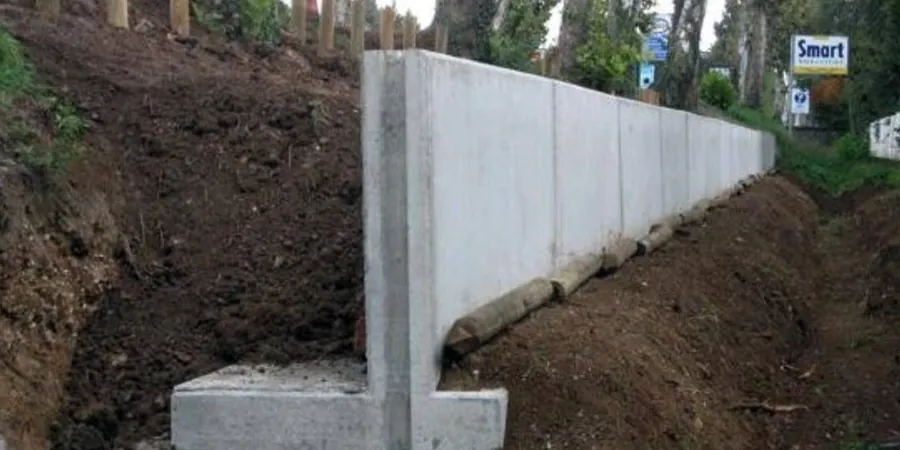
Delta BC's soft deltaic soils mean that a retaining wall's failure often begins with underestimated groundwater pressure and undrained shear strength.
Methodology applied in Delta BC
Demonstration video
Local geotechnical conditions in Delta BC
The Fraser River delta's high precipitation and seasonal flooding create a constant challenge for retaining wall design in Delta BC. Water pressure buildup behind the wall is the number one cause of failure here. Combined with the low shear strength of the native silt and organic deposits, the risk of rotational or sliding failure increases significantly. We always include a drainage layer and weep holes in the design, and for taller walls we recommend a structural tie-back system. The slope stability analysis for the retained soil is critical to ensure long-term performance, especially after heavy rain events.
Our services
We offer two specialized retaining wall design services tailored to Delta BC's soil profile.
Gravity and Cantilever Wall Design
For walls up to 4 m in height, we design reinforced concrete or masonry cantilever walls that rely on the weight of the structure and soil above the base to resist overturning. We include waterproofing, drainage, and seismic detailing per NBCC 2020.
Mechanically Stabilized Earth (MSE) Walls
For taller or more cost-sensitive projects, MSE walls use geogrid or steel reinforcement within the backfill to create a stable mass. Our design checks internal and external stability, including pullout resistance and global sliding in the soft Delta BC soils.
Frequently asked questions
How much does retaining wall design cost in Delta BC?
Typical geotechnical design fees for a retaining wall in Delta BC range between CA$1.380 and CA$5.960, depending on wall height, site access, and required testing. This includes site investigation, analysis, and stamped drawings. Volume discounts apply for multiple walls on the same property.
What soil conditions are typical for retaining walls in Delta BC?
The dominant soils are Fraser River silt, clayey silt, and occasional peat lenses. The water table sits near the surface, often within 1 m. Standard design parameters include an effective friction angle of 28-30° and undrained shear strength of 30-50 kPa for the silt layers.
Do I need a geotechnical report before building a retaining wall in Delta BC?
Yes. The local building authority typically requires a geotechnical report for any wall over 1.2 m in height. The report must include soil classification, groundwater conditions, and a design recommendation for the wall's foundation and drainage system.
How does seismic loading affect retaining wall design in Delta BC?
Delta BC falls within a moderate seismic zone. NBCC 2020 requires a seismic analysis for walls supporting more than 0.5 m of retained soil. We calculate the pseudo-static seismic coefficient and check for sliding and overturning under the design earthquake. Liquefaction is a concern near the river channels.