Delta BC sits on the Fraser River delta, where post-glacial sediments dominate the upper 300 m. But beneath the alluvial blanket, weathered Tertiary bedrock and glacial till form a distinct residual soil horizon. This layer behaves nothing like the overlying sands and silts. Residual soils here retain relict structure from the parent rock, yet their strength can drop sharply when saturated or disturbed. Our lab team has characterized these profiles for dozens of sites in Delta BC, from North Delta uplands to the Burns Bog perimeter. We run index tests, mineralogical analysis, and suction measurements to capture the true behavior of these materials. Before foundation design, coupling this characterization with a georradar survey helps map the weathered/unweathered interface across the site.
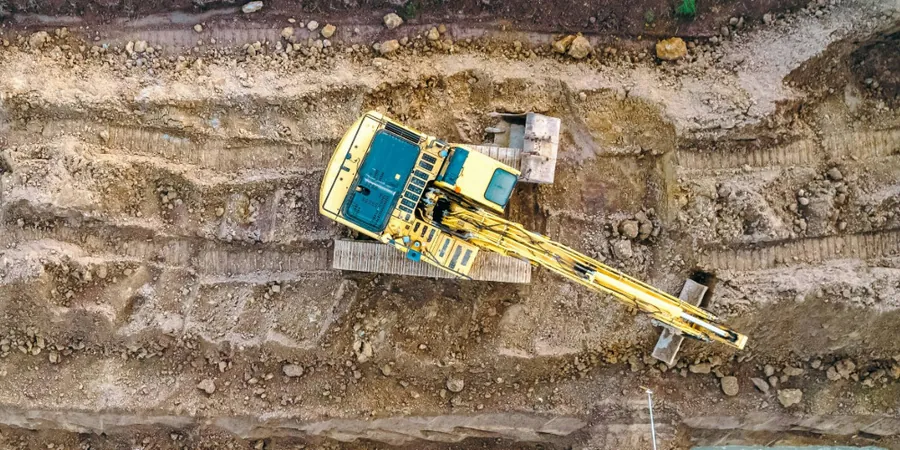
Residual soils in Delta BC lose up to 60% of their strength when saturated. Testing before rain is not optional.
Methodology applied in Delta BC
- Gradation shift from silty sand to high-plasticity clay with depth
- Dry density ranging from 1.4 to 1.8 g/cm³ depending on weathering intensity
- Atterberg limits showing plasticity indices between 20 and 45
- Collapse potential upon wetting, measured via double-oedometer tests
Local geotechnical conditions in Delta BC
A common error in Delta BC is treating residual soils like the uniform alluvium above. Design teams assume standard bearing capacities from local tables. They skip suction and collapse testing. Then spring rains arrive. The ground softens. Settlements double. We have seen slab-on-grade failures and leaning retaining walls caused by ignoring the collapse mechanism. Residual soils need unsaturated testing, not just routine index properties. That is the only way to capture the true response under wetting and loading.
Our services
Our residual soil characterization package includes the following field and laboratory services, tailored to Delta BC conditions.
Index & Classification Testing
Full suite including grain size analysis (ASTM D6913), Atterberg limits (CSA A23.2-2A), and natural moisture content. We classify the profile per USCS and correlate with local experience in Delta BC.
Unsaturated & Collapse Testing
Double-oedometer collapse tests (ASTM D5333 (CFEM Ch 4) (CFEM Ch 4) (CFEM Ch 4) (CFEM Ch 4) (CFEM Ch 4)) and suction measurements via filter paper method. Essential for residual soils that lose strength upon wetting. We report collapse potential and recommend mitigation.
Frequently asked questions
What is residual soil characterization and why is it needed in Delta BC?
Residual soil characterization identifies the engineering properties of weathered bedrock or glacial till that has not been transported. In Delta BC, these soils sit below the deep alluvial deposits and behave very differently. They can collapse when wetted, have variable strength, and require site-specific testing rather than generic bearing values.
How much does residual soil characterization cost in Delta BC?
A typical characterization program including index tests and collapse potential runs between CA$1,000 and CA$4,350 depending on the number of samples and test methods. Soils with high plasticity or suspected sulphates may require additional testing that increases the cost.
What is the difference between residual soil and alluvial soil behavior?
Alluvial soils in Delta BC are normally consolidated, layered, and relatively uniform. Residual soils retain relict structure, are often unsaturated, and exhibit collapse upon wetting. Their strength is highly sensitive to moisture changes. Standard bearing tables for alluvium do not apply.
Which test is most critical for residual soils in this region?
The double-oedometer collapse test (ASTM D5333 (CFEM Ch 4) (CFEM Ch 4) (CFEM Ch 4) (CFEM Ch 4) (CFEM Ch 4)) is the most critical. It quantifies the volume change when the soil is wetted under load. Without it, foundations may settle excessively after the first wet season. Suction measurement is a close second for understanding in-situ stress state.
Can residual soil characterization replace a full geotechnical investigation?
No. Characterization is a component of a broader investigation that includes borings, SPT, and groundwater monitoring. In Delta BC, we recommend combining characterization with MASW-Vs30 profiling and at least one borehole per 500 m² to capture lateral variability.