Building on fill in Delta BC presents a different challenge than on the native Fraser River silt. The older residential areas near Ladner Trunk Road often sit on uncontrolled fill, while newer subdivisions on Annacis Island use engineered compacted fill. This variation means every site requires a dedicated foundations on fill analysis to determine whether the soil can support the proposed load. Without it, you risk differential settlement that cracks slabs and misaligns foundations. We combine historical fill records with current subsurface testing to give you a clear picture of what lies beneath.
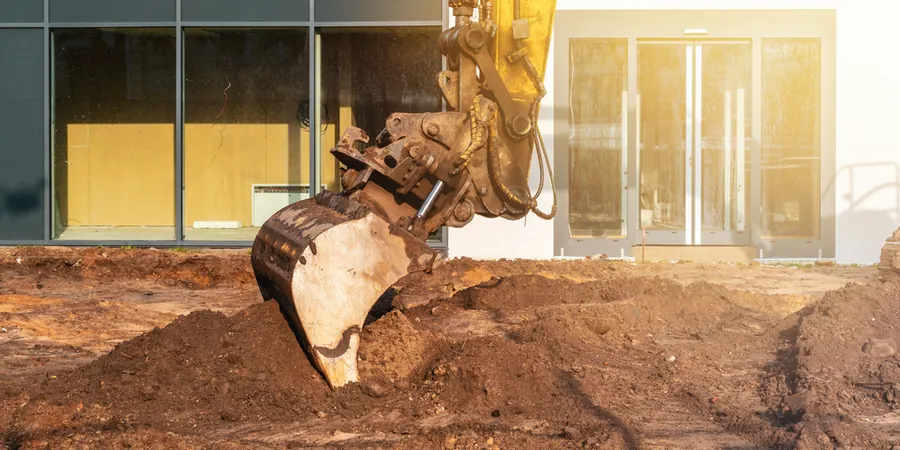
Uncontrolled fill can settle up to 50 mm over five years, enough to crack a foundation slab and damage structural framing.
Methodology applied in Delta BC
Demonstration video
Local geotechnical conditions in Delta BC
A commercial building on River Road went up on three meters of mixed fill—construction debris, sand, and clay lumps. The geotechnical report missed the buried wood debris at depth. Within two years, the slab-on-grade had settled 40 mm more than predicted, pulling the entrance ramp out of alignment. The fix required underpinning with helical piles and replacing the slab. That is the kind of call a thorough foundations on fill analysis prevents. Delta BC has too many variable fill sites to gamble on incomplete data.
Our services
We cover every aspect of foundations on fill analysis with a focused set of services:
Fill Thickness Mapping
Boreholes and test pits to define the vertical and lateral extent of fill across the site.
Compaction Verification
Field density tests (sand cone or nuclear gauge) to confirm fill meets project specifications.
Settlement Analysis
Consolidation testing and numerical modeling to predict immediate and long-term settlement.
Bearing Capacity Assessment
SPT-based and plate load test methods to establish allowable bearing pressure for shallow foundations.
Frequently asked questions
How deep should boreholes go for a foundations on fill analysis in Delta BC?
Boreholes should extend at least 3 meters below the bottom of the fill layer, or to a depth where competent native soil is confirmed. In Delta BC, where fill often overlies soft Fraser River silt, we typically drill to 6 to 10 meters to capture the full profile.
What is the typical cost range for a foundations on fill study in Delta BC?
A standard analysis for a single-family lot runs between CA$1.100 and CA$3.590 depending on the number of boreholes, lab tests, and reporting detail. Larger commercial sites with multiple borings and settlement modeling fall at the higher end.
Can I build directly on fill if it is well-compacted?
Engineered fill that meets the project's compaction specifications can support footings, but you still need a geotechnical analysis. The fill must be tested for density, moisture, and uniformity. Uncontrolled fill almost always requires over-excavation or deep foundations.