Delta BC sits on the Fraser River delta, where thick deposits of silt, clay, and peat dominate the subsurface. Many projects here run into unexpected soil behavior because standard visual classification misses key plasticity or organic content. That is why we run full USCS and AASHTO classification on every sample — it turns a handful of dirt into a reliable engineering property. Before any foundation design, we combine this with a density test using the sand cone method to confirm compaction in the field, or a vane shear test to measure undrained shear strength in soft clays. The result is a clear soil profile you can actually build on.
A peat layer in Delta BC can settle over a meter under load — USCS classification flags it before design begins.
Methodology applied in Delta BC
Demonstration video
Local geotechnical conditions in Delta BC
A six-story condo on River Road in Delta BC recently faced settlement cracks because the design assumed uniform sand. The soil turned out to be layered silt and organic clay — a classic USCS group CH/OH mix. Without proper classification, the foundation was undersized. We stepped in, reclassified the full profile, and the engineer redesigned the footing system. That is the real cost of skipping classification: delays, change orders, and structural risk. Our reports flag these issues early so you never build on assumptions.
Our services
We deliver soil classification that matches local ground conditions in Delta BC. Our lab runs full suites for residential, commercial, and municipal projects.
USCS Classification with Atterberg Limits
Complete group symbol and group name per CFEM (Canadian Foundation Engineering Manual). Includes liquid limit, plastic limit, and fines content. Ideal for foundation design and earthwork specs in Delta BC's variable silts and clays.
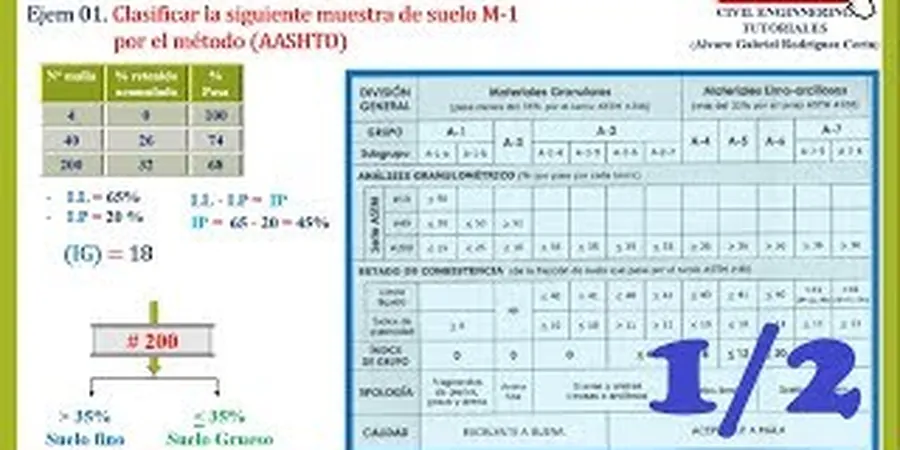
AASHTO Classification for Pavement & Subgrade
Ranks soil from A-1 to A-7 for road and highway projects. We include group index calculation and frost-susceptibility assessment. Commonly used by municipalities in Delta BC for road design.
Frequently asked questions
What is the difference between USCS and AASHTO classification?
USCS groups soils by grain size and plasticity (e.g., CH, SM) and is used worldwide for geotechnical design. AASHTO ranks soils from A-1 (best) to A-7 (poor) specifically for highway subgrade and pavement evaluation. In Delta BC, we often run both because the organic silts here behave differently under roads versus building foundations.
How much does soil classification cost in Delta BC?
Standard USCS/AASHTO classification runs between CA$90 and CA$140 per sample, including Atterberg limits and sieve analysis. Bulk project rates or multiple samples from the same site may reduce the per-sample cost.
Can soil classification detect peat or organic soils?
Yes. USCS classification includes the symbol PT for peat and identifies organic clays (OH) and organic silts (OL) based on color, odor, and loss on ignition testing. In Delta BC, where peat layers are common near Burns Bog and along the river, this is critical for foundation design.
How long does the classification process take?
Typical turnaround is 3 to 5 business days from sample arrival. Rush service is available within 48 hours for an additional fee. We coordinate with local drillers in Delta BC to keep your project on schedule.