Designing deep foundations in Delta BC demands a clear understanding of how load transfers through the pile shaft versus the pile tip. The NBCC 2020 and CSA A23.3:19 both require engineers to verify both skin friction and end bearing contributions, especially in the soft deltaic deposits typical of the Fraser River floodplain. Our team routinely performs this analysis for projects across Delta BC, combining site-specific CPT data with laboratory strength tests. The key challenge is that the laminated silts and organic clays here can produce very different friction ratios along the shaft compared to what is measured at the tip, so we always cross-check against cone penetration test profiles and soil classification results before finalizing design values.
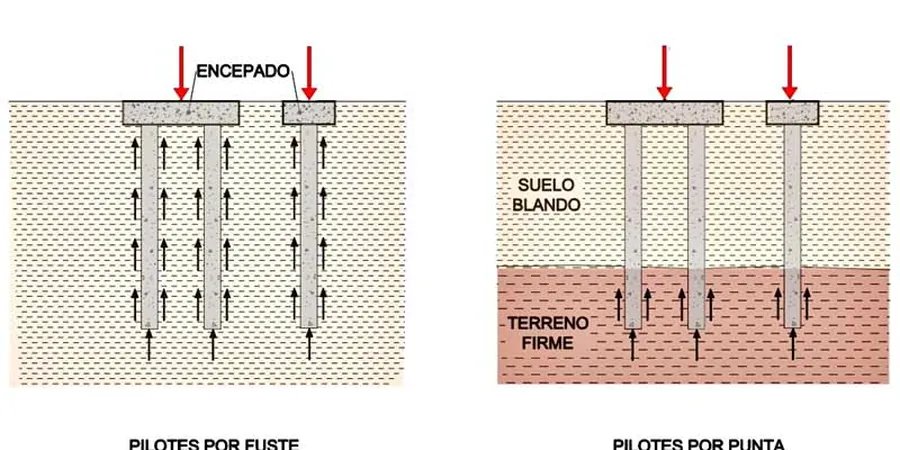
In Delta BC's deltaic soils, ignoring shaft friction degradation from pore pressure build-up can overestimate design capacity by over 40 percent.
Methodology applied in Delta BC
Local geotechnical conditions in Delta BC
A common mistake we see in Delta BC is when contractors assume end bearing will carry the majority of the design load without verifying the actual tip resistance in the deeper sands. The reality is that some areas near the river mouth have only 5 to 8 metres of dense sand before hitting softer strata again. Relying on end bearing alone in those conditions leads to unacceptable settlement. We always recommend running a static load test to failure on at least one production pile per site, because the skin friction component can degrade significantly if the pile is driven in a group — the so-called group effect is very real in these compressible soils. Ignoring that interaction has caused foundation failures in local warehouse developments.
Our services
Our pile skin friction vs. end bearing analysis in Delta BC includes the following specific services:
CPT-based shaft friction profiling
Continuous cone penetration testing with pore pressure measurement to calculate unit shaft resistance every 2 cm along the pile profile.
Static load test interpretation
Analysis of ASTM D1143 maintained-load tests using Davisson offset method to separate skin friction from end bearing components.
Pile driving analysis (PDA)
High-strain dynamic testing with CAPWAP signal matching to estimate mobilized shaft and tip resistances during driving.
Frequently asked questions
What is the difference between skin friction and end bearing in piles?
Skin friction is the load carried by the interface between the pile shaft and the surrounding soil, while end bearing is the load transmitted through the pile tip to the stratum below. In Delta BC's soft deltaic soils, skin friction often dominates for the upper 15 to 20 metres, and end bearing only becomes significant when the pile reaches dense sands or gravel layers.
How does the Fraser River delta geology affect pile capacity in Delta BC?
The thick sequence of soft clays and silts means that shaft friction values are generally lower than in glacial till deposits. The high organic content in some layers can also cause creep and time-dependent reduction in skin friction. End bearing is only reliable if the pile tip reaches the Pleistocene sand unit, which varies in depth from 20 to over 40 metres depending on location within Delta BC.
What methods do you use to separate skin friction from end bearing in pile tests?
The reference range for this service in Delta BC is CA$1.500 - CA$4.060. The final price depends on the project scope and volume.
How much does a pile skin friction vs. end bearing analysis cost in Delta BC?
The typical cost ranges between CA$1.500 and CA$4.060 depending on the number of test piles, depth of investigation, and whether static or dynamic testing is required. This includes field testing, laboratory soil strength tests, and a detailed report with capacity recommendations per NBCC 2020.