The contrast between the firm glacial till underlying parts of North Delta and the soft, compressible Fraser River silt that dominates the south and west of the city is the defining challenge for any deep foundation project here. A pile foundation design that works perfectly for a townhouse complex in the Sunbury neighbourhood, where shallow refusal can be reached within ten meters, will not suit a high-rise along the River Road corridor, where the same end-bearing stratum might sit thirty meters down. That variability forces the engineering team to look at each site individually, correlating CPT soundings and borehole logs before selecting a pile type — driven precast concrete for the denser northern zones, steel H-piles or large-diameter drilled shafts where the soft deltaic sequence demands deeper embedment. The local experience of having tested dozens of building sites across the municipality means the team can anticipate the transition zone at roughly the 80th Street alignment, where the silty clay layer thickens, and adjust the pile capacity analysis accordingly.
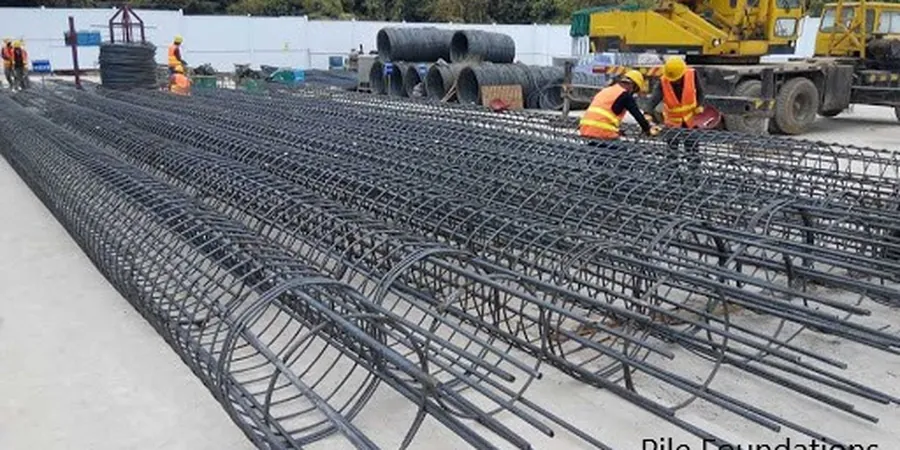
The soft deltaic sequence in south Delta BC can require driven piles to reach depths of thirty meters before encountering competent bearing strata.
Methodology applied in Delta BC
Demonstration video
Local geotechnical conditions in Delta BC
The most common mistake we see on Delta BC construction sites is assuming that a pile foundation design validated on the Tsawwassen side will perform identically in East Ladner. The organic silt and peat layers found near the Fraser River arm can cause negative skin friction that reduces net capacity by up to twenty percent. Contractors who skip the pile load test program to save time often end up redesigning the cap connection after the dynamic testing reveals lower than expected shaft resistance. A proper geotechnical baseline report that differentiates between side friction in the clay and end bearing in the sand is not optional — it is the only way to avoid over-engineered or, worse, under-designed foundations in this deltaic environment.
Our services
Our team provides the full spectrum of geotechnical services needed to deliver a reliable pile foundation design for projects across Delta BC, from single-family infill homes to multi-storey commercial buildings.
Geotechnical site investigation for deep foundations
Borehole drilling with SPT and CPT sampling, laboratory testing of soil strength and consolidation parameters, and preparation of a foundation design report that specifies pile type, length, and capacity per the applicable building code.
Pile load testing and dynamic analysis
On-site PDA testing during pile driving, CAPWAP signal matching to back-calculate shaft and toe resistances, and static load testing (ASTM D1143) when required by the structural engineer or local authority.
Frequently asked questions
What is the typical cost range for a pile foundation design study in Delta BC?
For a standard residential or low-rise commercial project in Delta BC, the geotechnical investigation and design report typically falls between CA$2,180 and CA$7,980. The final figure depends on the number of boreholes, depth of exploration, and whether PDA testing is included.
How deep do piles usually need to be in Delta BC?
Depths vary significantly by location. In North Delta, competent glacial till may be found at 10 to 15 meters. In South Delta, near the River Road corridor or Burns Bog, the soft silt and clay sequence can push pile tips to 30 meters or more before reaching adequate bearing strata.
What pile type works best for Delta BC's soft deltaic soils?
Steel H-piles and driven precast concrete piles are common because they can be driven through the soft layers to reach deeper bearing soils. For vibration-sensitive sites, continuous flight auger (CFA) piles or drilled shafts are preferred to minimize disturbance to adjacent structures.
Do I need a seismic analysis as part of the pile foundation design?
Yes, Delta BC lies in a moderate-to-high seismic zone per NBCC 2020. The design must account for liquefaction potential of the saturated Fraser River silt and the resulting lateral spreading or downdrag forces on the pile group. A site-specific seismic response analysis is typically required for buildings of Importance Category II or higher.