Delta BC sits on the Fraser River delta, a landscape defined by flat farmland, tidal sloughs, and a water table that rarely drops more than a meter below grade. The combination of silty alluvial soils, seasonal flooding, and seismic vulnerability makes geotechnical drainage design a critical first step for any foundation or earthworks project. Water control here isn't just about keeping basements dry; it directly affects bearing capacity, slope stability, and long-term settlement. A proper drainage strategy begins with field permeability tests and piezometer monitoring to map pore pressure behavior across the site. These data inform trench drain spacing, filter layer gradation, and the selection of geotextile wraps that prevent soil migration without clogging.
In Delta BC's saturated soils, drainage design is the single most effective mitigation against differential settlement and liquefaction-induced damage.
Methodology applied in Delta BC
Local geotechnical conditions in Delta BC
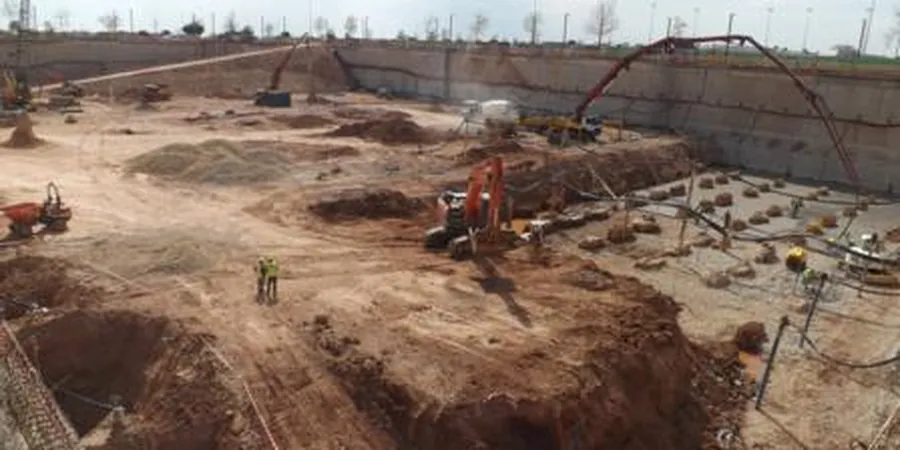
Water management during excavation in Delta BC often requires wellpoint systems or deep sumps to keep the working face dry. The challenge is that dewatering in silty soils can cause settlement of adjacent structures if the drawdown cone extends beyond the property line. For this reason, we install vibrating-wire piezometers at the site perimeter before any pumping begins. The data feeds a real-time cutoff threshold: if drawdown exceeds 0.5 m at the nearest foundation, the pumping rate is reduced or the system is switched to a re-injection circuit. This approach, combined with a monitoreo de excavaciones protocol, has proven effective in protecting neighboring infrastructure during deep basement construction.
Our services
We offer a full suite of drainage design services tailored to Delta BC's unique subsurface conditions:
Perimeter and Foundation Drainage
Design of trench drains, collector pipes, and sump systems with filter compatibility analysis for the local silty sands and peat layers.
Settlement and Dewatering Control
Real-time pore pressure monitoring during excavation, with re-injection circuits to limit drawdown impact on adjacent properties.
Retention Basin and Outfall Design
Sizing of detention facilities and gravity outfalls that comply with Delta BC's drainage bylaws and fish habitat protection regulations.
Frequently asked questions
Why is geotechnical drainage design different in Delta BC compared to other parts of the Lower Mainland?
Delta BC's soils are predominantly Fraser River silts and organic peat, which have low hydraulic conductivity and high compressibility. The water table is within 0.3 to 1.0 m of the surface for most of the year, so any excavation or foundation work requires a drainage system that can handle sustained inflow without losing filter integrity. The seismic hazard also means the drainage system must function after a design earthquake to relieve excess pore pressure.
What standards do you follow for drainage design in Delta BC?
We design to the NBCC 2020 structural commentaries, ASTM D2434 for permeability testing, and the FHWA-NHI-07-096 manual for subsurface drainage. For projects in the Agricultural Land Reserve, we also follow the BC Ministry of Agriculture's drainage guidelines to avoid impacting irrigation and field drainage.
How much does a geotechnical drainage design typically cost?
For a standard residential lot in Delta BC, the drainage design component of a geotechnical report ranges from CA$1,250 to CA$2,920. This includes field permeability testing, filter design calculations, and construction drawings. Larger commercial or subdivision projects may cost more due to additional piezometer monitoring and hydraulic modeling.
Can you retrofit drainage to an existing building in Delta BC?
Yes, we can design retrofit solutions such as interior perimeter drains with sump pumps, exterior French drains installed via trenching, or horizontal drains drilled under the slab. The key is to match the retrofit system to the existing foundation type and to avoid undermining footings during installation. We always conduct a pre-construction site investigation to confirm soil conditions under the existing slab.