Flexible pavement design in Delta BC is governed by the subgrade conditions typical of the Fraser River delta, where soft silty clays and peat deposits dominate the upper 10 to 15 meters. The AASHTO 1993 Guide for Design of Pavement Structures provides the empirical framework used by the team, coupled with resilient modulus (Mr) derived from repeated load triaxial testing per AASHTO T-307. Given the high water table across North Delta and Ladner, drainage coefficients must be adjusted, and the structural number (SN) is calculated using layer coefficients that reflect the actual stiffness of local aggregates. Before any design phase, a thorough subgrade evaluation is conducted to determine the California Bearing Ratio (CBR) at in-situ moisture content, which directly influences the required thickness of the asphalt and base layers.
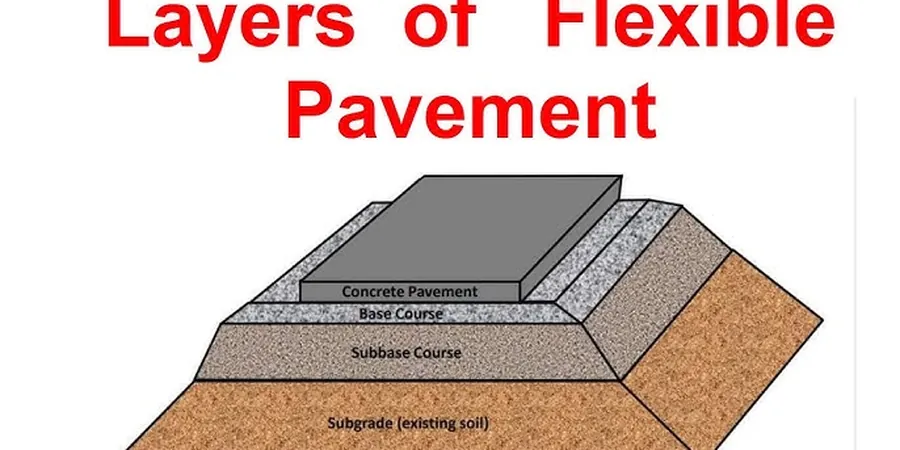
The resilient modulus of Delta BC subgrades ranges from 25 to 55 MPa, requiring asphalt thicknesses between 150 and 250 mm for arterial roads.
Methodology applied in Delta BC
Local geotechnical conditions in Delta BC
A municipal roadway project on 64th Street in North Delta encountered differential settlement after two winters because the design assumed a uniform subgrade CBR of 5% across the entire alignment. Boreholes revealed a buried peat lens up to 1.8 meters thick beneath the southbound lane, where the organic layer had not been identified during the initial site investigation. The flexible pavement section cracked longitudinally within 18 months, requiring full-depth reclamation. This scenario underscores the need for a dense boring grid in peat-prone zones and the use of geotextile reinforcement at the subgrade-base interface to distribute loads and reduce rutting potential in soft soil areas.
Our services
The team offers a complete suite of geotechnical services tailored to flexible pavement design in Delta BC, from field investigation through structural number verification.
Subgrade Soil Investigation & CBR Testing
Borehole drilling and test pit excavation to recover undisturbed samples for lab CBR and resilient modulus testing, with moisture-density relationships per ASTM D1557 (also CFEM Ch 2) (also CFEM Ch 2) (also CFEM Ch 2) (also CFEM Ch 2) (also CFEM Ch 2).
Traffic Load Analysis & ESAL Calculation
Axle load spectra collection from municipal traffic counts, classified per FHWA vehicle classes, and conversion to equivalent single axle loads for design life of 20 years.
Structural Section Design & Layer Optimization
Multi-layer elastic analysis using Kenlayer or AASHTOWare to determine asphalt, base, and subbase thicknesses, with cost optimization for local aggregate availability.
Frequently asked questions
What is the typical subgrade CBR for flexible pavement design in Delta BC?
In-situ CBR values across Delta BC range from 2% to 8%, with the lowest values found in the Burns Bog area where organic silts dominate. Most designs assume a CBR of 3% to 5% for the subgrade unless specific test pit data indicates otherwise.
How does the high water table in Delta BC affect flexible pavement design?
The seasonal water table sits between 0.5 and 1.5 meters below grade in much of Delta BC, reducing the resilient modulus of subgrade soils by 30% to 50% during spring thaw. Drainage coefficients in the AASHTO equation are adjusted downward (m2 = 0.80) to account for moisture-sensitive conditions.
What is the estimated cost range for a flexible pavement design study in Delta BC?
A complete geotechnical investigation with laboratory testing and structural design typically costs between CA$2.430 and CA$8.120, depending on the number of boreholes, traffic analysis complexity, and the inclusion of resilient modulus testing.
Can flexible pavement design accommodate peat deposits common in Delta BC?
Peat deposits require special treatment. If the peat layer is less than 1 meter thick, excavation and replacement with granular fill is standard. For deeper deposits, lightweight fill or geotextile reinforcement at the subgrade interface is used to prevent differential settlement and rutting.