Delta BC sits on the Fraser River delta, a thick sequence of alluvial silts, sands, and clays deposited over millennia. The high water table and fine-grained layers typical of this region make it essential to understand groundwater flow patterns before any excavation or foundation work. Field permeability tests using the Lefranc method allow engineers to measure hydraulic conductivity directly in boreholes, providing reliable data for dewatering design and seepage analysis. When combined with a geotechnical resistivity survey to map stratigraphy, the results help build a coherent hydrogeological model of the site. The Lugeon variant, applied in fractured or coarse materials, complements the Lefranc test where high permeability zones may exist.
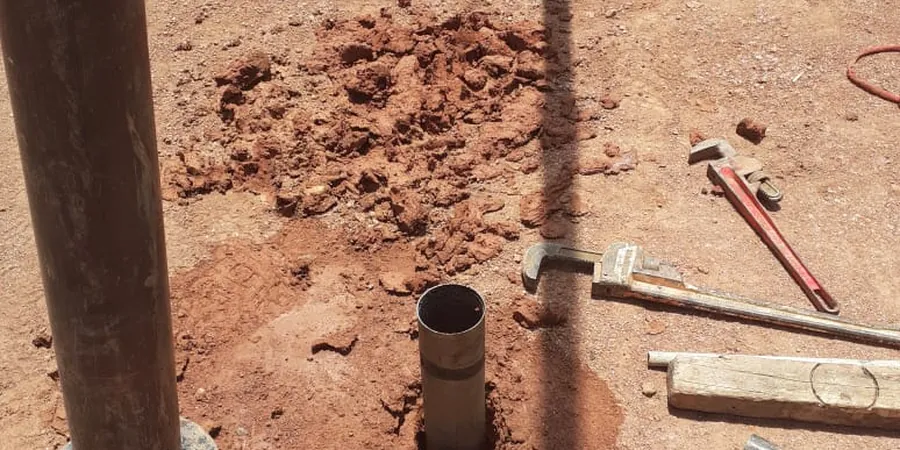
In Delta BC’s layered alluvial soils, a single Lefranc test can reveal preferential flow paths that laboratory tests entirely miss.
Methodology applied in Delta BC
Local geotechnical conditions in Delta BC
Consider two contrasting areas within Delta BC: the sandy deposits near the Fraser River shoreline versus the thick plastic clays of the inland Burns Bog region. In the sandy zones, underestimating permeability by even one order of magnitude can lead to uncontrolled groundwater inflow during excavation, jeopardizing worker safety and structural stability. In the clay zones, overestimating drainage capacity may result in unrealistic dewatering costs and schedule delays. A properly executed field permeability test in Delta BC distinguishes these scenarios with site-specific data, allowing the design team to tailor seepage control measures and avoid costly surprises.
Our services
We offer two complementary field permeability testing services tailored to the hydrogeological conditions of Delta BC.
Lefranc Constant Head Test
In-place measurement of hydraulic conductivity in boreholes drilled through sands, silts, and gravels. Ideal for dewatering design and foundation seepage analysis in Delta BC’s alluvial soils.
Lugeon Packer Test
Multi-stage pressure injection test for fractured rock or coarse granular materials. Determines permeability and detects fracture dilation under high pressure, suitable for deep excavations or grouting projects.
Frequently asked questions
What is the difference between the Lefranc and Lugeon field permeability tests?
The Lefranc test is a constant-head or falling-head injection/extraction test performed in a single borehole section at low pressure, suitable for unconsolidated soils. The Lugeon test applies multiple pressure stages (typically 3 to 5) to evaluate permeability changes under increasing head, primarily used in fractured rock formations. Both methods yield hydraulic conductivity (k) values, but the Lugeon test also identifies fracture dilation thresholds.
How does the high water table in Delta BC affect field permeability test results?
The shallow water table — often less than 2 m below ground surface — means the soil is near or fully saturated. This condition simplifies the Lefranc test setup because the initial head difference is small, but it also means that any test conducted must account for tidal fluctuations in the Fraser River, which can alter groundwater levels by up to 0.5 m daily. We log water levels continuously during the test to correct for these variations.
What is the typical cost range for a field permeability test in Delta BC?
For a standard Lefranc or Lugeon test in a single borehole section, the cost typically ranges between CA$750 and CA$1,600. This includes mobilization within Delta BC, test execution, data analysis, and a report with calculated hydraulic conductivity values. Additional sections or complex setups (e.g., double packers, deep boreholes) may increase the price.
How many test sections should be planned for a typical residential or commercial project?
For small residential developments (e.g., a single basement excavation), one to two test sections in a representative borehole are usually sufficient. For larger commercial sites with variable stratigraphy, we recommend at least three test sections distributed across different soil layers. A prior review of existing borehole logs helps optimize the number and depth of test locations.