We worked on a 15-storey tower in Delta BC where the top 8 metres of fill were too loose for conventional foundations. Standard deep foundations would have cost the project months of schedule and hundreds of thousands in extra steel. Instead we applied dynamic compaction design to densify the granular fill directly. The process uses a heavy tamper dropped from 20 to 25 metres to drive energy into the ground. After treatment the N-values went from 4 to 18 in the upper zone. That allowed a raft foundation instead of piles. Before starting we always run a MASW survey to map the loose pockets across the site. That step avoids wasted drops in areas that are already competent. For Delta BC, where the Fraser River delta deposits are layered and variable, this pre-treatment survey is non-negotiable.
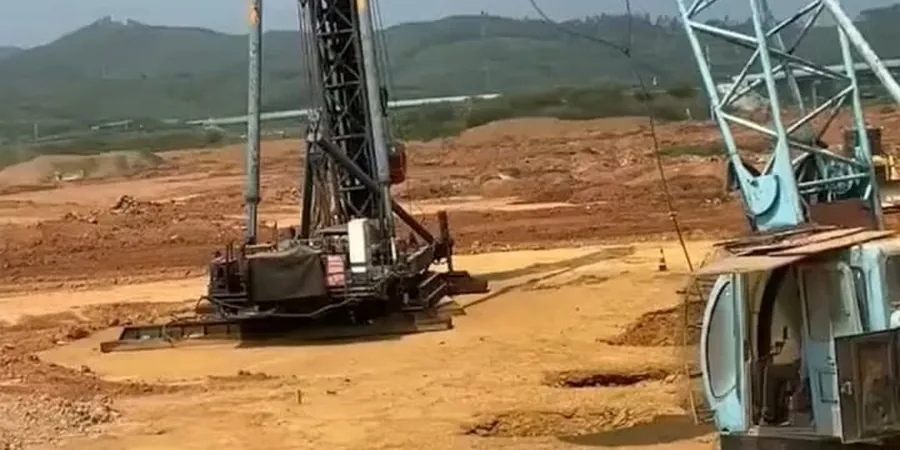
Dynamic compaction design in Delta BC typically improves blow counts from 4 to 18 in the upper 8 metres, enabling shallow foundations on former fill.
Methodology applied in Delta BC
Local geotechnical conditions in Delta BC
NBCC 2020 requires site-specific liquefaction assessment for seismic site classes D, E, and F. Delta BC falls largely into class E due to the thick deposits of loose sand and silt. If loose fill is left untreated, earthquake shaking can trigger differential settlement and lateral spreading. Dynamic compaction design reduces this risk by increasing relative density to 70-80% in the treated zone. The key risk is the water table — if it sits within 3 metres of the surface, compaction energy dissipates into pore water instead of densifying the soil. We always lower the water table temporarily with well points or combine treatment with deep soil mixing where the silt content exceeds 30%. Proper design avoids the false economy of skipping treatment in areas that look competent on surface.
Our services
Our team provides the full cycle of dynamic compaction design in Delta BC, from site investigation through specification and quality control.
Site investigation and MASW mapping
We run MASW profiles and SPT borings to map loose zones and define the treatment footprint. The survey uses a 48-channel array to capture shear-wave velocity profiles to 20 metres depth.
Design and specification
We produce drop patterns, energy calculations, and post-treatment acceptance criteria. The design references NBCC 2020 seismic provisions and the project-specific bearing capacity requirements.
Field supervision and QA/QC
Our engineers supervise the drops, monitor crater depths, and verify post-treatment density with SPT and pressuremeter tests. We provide a sealed compaction report for building permit submission.
Frequently asked questions
How does dynamic compaction design work in Delta BC's soft soils?
A heavy tamper weighing 15-20 tonnes is dropped from 20-25 metres to transfer kinetic energy into the ground. The impact waves densify granular soils up to 10 metres depth. For Delta BC's layered silt and sand deposits, we reduce grid spacing to 4 metres and add a second pass with offset locations to treat the full footprint.
What is the typical cost range for dynamic compaction design in Delta BC?
Costs for design, site investigation, and QA/QC supervision range between CA$1,820 and CA$5,580 depending on the site area, number of passes, and depth of treatment required. The range covers the full engineering scope but excludes the contractor's drop execution.
What site conditions limit the effectiveness of dynamic compaction?
High groundwater within 3 metres of the surface and cohesive soils with more than 30% fines reduce effectiveness. In those cases we pair the design with temporary dewatering or use deep soil mixing as an alternative. The silt content in Delta BC's Fraser River deposits is typically 15-25%, so dynamic compaction remains viable for most sites.
How do you verify the treatment quality after compaction?
We run post-treatment SPT borings at one location per 300 square metres and compare N-values against the design target of 15 blows per 300mm. Where the site has critical seismic exposure, we also perform pressuremeter tests to measure modulus of deformation and confirm uniformity across the treated zone.