When our team works in Delta BC, we rely on the Cone Penetration Test (CPT) as a first-line investigation tool, especially given the region’s deep alluvial deposits. The Fraser River delta has created a complex stratigraphy of soft clays, silts, and loose sands that can reach depths of 300 meters, so standard auger drilling alone rarely captures the full picture. Under ASTM D5778-20, the CPT cone measures tip resistance and sleeve friction continuously, giving us a near-real-time profile of soil behavior. For projects on the edge of Burns Bog or along the Boundary Bay shoreline, we often complement this with a microzonificación sísmica study to map liquefaction hazard across the municipality.
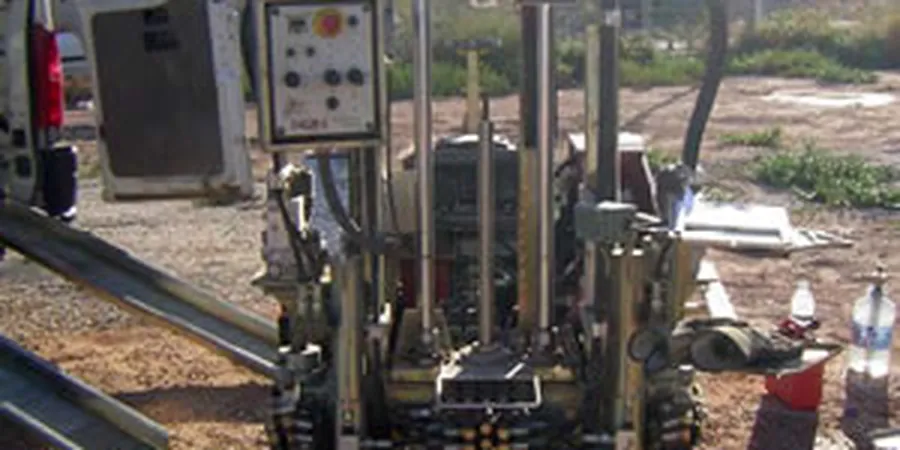
The CPT cone records soil resistance every 2 centimeters, producing a continuous log that static methods like SPT simply cannot match for resolution in Delta's layered silts.
Methodology applied in Delta BC
- Cone tip resistance (qt) for bearing capacity
- Sleeve friction (fs) to estimate soil type via Robertson chart
- Pore pressure ratio (Bq) to identify contractive versus dilative sands
Local geotechnical conditions in Delta BC
The most common risk our team encounters in Delta BC is underestimating the compressibility of the soft to firm clay that extends from Ladner to Tilbury Island. Without continuous CPT data, you might design a shallow foundation based on a single SPT blow count that happened to hit a thin sand seam, missing the 8-meter clay layer beneath. In the 2011 Christchurch earthquake analog, liquefaction of loose silty sands in a delta environment caused widespread foundation movement. We mitigate this by running the CPT (Cone Penetration Test) with seismic cone add-ons to measure vs30/" data-interlink="1">shear wave velocity (Vs), which feeds directly into site class determination per NBCC 2020.
Our services
Beyond the standard CPT push, we offer specialized variations that adapt to Delta BC's specific ground conditions and project budgets.
Seismic CPT (SCPT) – Shear Wave Velocity Profiling
We add a seismic receiver to the cone to measure Vs at 1-meter intervals. This is essential for NBCC 2020 site class (A–F) and for calculating cyclic resistance ratio in liquefaction assessments.
Piezocone with Dissipation Testing (CPTu)
A fully saturated porous element behind the cone tip records u2 pore pressure. Dissipation tests at key depths (every 3–5 m) give us the coefficient of consolidation (cv) for settlement analysis in the Fraser River Silt.
Truck- vs. Track-Mounted CPT Rig
For tight residential lots in North Delta or rough terrain near the Fraser River foreshore, we deploy a lightweight track-mounted rig that exerts less than 5 kPa ground pressure, avoiding surface disturbance on sensitive clay sites.
Frequently asked questions
What is the difference between CPT and SPT for Delta BC soils?
CPT gives a continuous profile with 2 cm resolution, whereas SPT provides blow counts only at 1.5 m intervals. In the soft clays of Delta BC, CPT is preferred because it avoids sample disturbance and captures thin sand lenses that SPT might miss.
How much does a CPT test cost in Delta BC?
A standard CPT (Cone Penetration Test) push to 20 m depth ranges from CA$200 to CA$350 per sounding, depending on access conditions and number of dissipation tests. Seismic CPT and deeper pushes increase the cost slightly.
Can CPT detect liquefiable soils in the Fraser River delta?
Yes. The CPT measures tip resistance and sleeve friction to identify loose, saturated silty sands (soil behavior type zones 5–6). When combined with vs30/" data-interlink="1">shear wave velocity from SCPT, we calculate the cyclic resistance ratio per Youd-Idriss (2001) method.
What depth can CPT reach in Delta BC?
Typically 20–35 m in soft soils using a 15-ton truck rig. In the stiff Fraser River Silt, refusal is common below 30 m, though deeper pushes are possible with hydraulic thrusters up to 25 tons.