Delta BC sits on the Fraser River delta — roughly 100 meters of soft Holocene sediments deposited over the last 10,000 years. These silty sands and low-plasticity clays can collapse when wetted under load. Our collapsible soil evaluation identifies that risk before you pour a single footing. We follow ASTM D5333 (CFEM Ch 4) (CFEM Ch 4) (CFEM Ch 4) (CFEM Ch 4) (CFEM Ch 4) for collapse potential and correlate results with local borehole data. For shallow foundations on suspect fill, we often pair this with a presurometer test to measure lateral stiffness in the same borehole. The Fraser delta's high water table means a small change in moisture can trigger sudden settlement. That's why we treat collapsible soil evaluation as a standard step in Delta BC — not an afterthought.
A 2% collapse strain at 200 kPa means 12 cm of differential settlement under a typical footing — enough to crack a slab.
Methodology applied in Delta BC
Local geotechnical conditions in Delta BC
Delta BC gets over 1,000 mm of rain a year, but the summer dry period can drop surface moisture below 15%. That's the trigger: a dry crust over collapsible silt, then a sudden pipe leak or heavy fall rain wets the soil and the structure settles. We've seen warehouse slabs drop 8 cm in two days after a water main break. The risk is highest in the Ladner and Tilbury industrial areas where natural ground was scraped flat and re-compacted poorly. Our collapsible soil evaluation catches these zones before they become claims. We map collapse-prone layers with a grid of test pits and oedometer tests — not just index properties.
Our services
We provide two core services for collapsible soil evaluation in Delta BC. Each is tailored to the site conditions and project stage.
Double-Oedometer Collapse Test
Undisturbed tube or block samples are loaded in two oedometer cells — one at natural moisture, one soaked. Collapse strain is the difference between the two curves. We run this on every borehole sample that shows low relative density (Dr < 50%) and low natural moisture (w < 20%). Results are delivered with a site-specific collapse potential contour map.
Field Infiltration & Flood Test
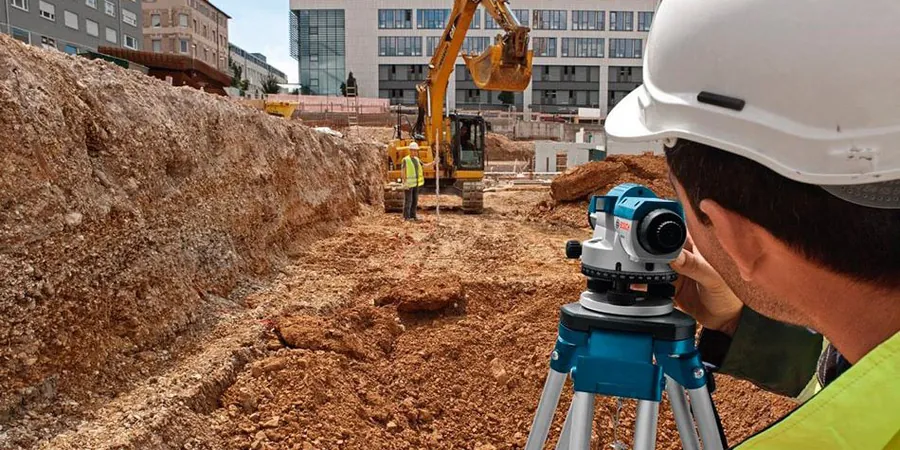
For large pad areas or infrastructure corridors, we construct a 3 m x 3 m test plot, flood it for 48 hours, and monitor surface settlement with automated total stations. This simulates worst-case wetting and gives real collapse magnitudes. We combine it with survey-grade settlement plates for long-term monitoring.
Frequently asked questions
How much does a collapsible soil evaluation cost in Delta BC?
A typical evaluation for a single-family lot runs between CA$1.100 and CA$2.200, including two test pits, two double-oedometer tests, and a short report. For commercial sites with 6–10 boreholes, the range is CA$2.800 to CA$3.240. Volume discounts apply for subdivisions.
What collapse strain is considered dangerous for a residential slab?
Anything above 1.5% collapse strain at 200 kPa is a red flag. At that level, a 4-inch slab can settle 6 mm — enough to crack tile. We recommend deep foundations or soil improvement when collapse strain exceeds 3%.
Can collapsible soil be improved on site without deep piles?
Yes. Pre-wetting the soil to 90% saturation before construction reduces collapse potential by 60–80%. Dynamic compaction or vibro-replacement stone columns also work in Delta's silt layers. We include improvement recommendations in every evaluation report.